Enhancing Self and Others' Perceptions Through Human Relations Incident Reflections
70 likes | 183 Vues
This guide explores using perceptual rating rubrics to assess self-perceptions, perceptions of purpose, and understandings of others. It emphasizes the importance of reflective listening in interviews and self-assessment, encouraging candidates to move beyond rehearsed responses. Participants are prompted to share meaningful experiences, like their “perfect day,” significant human relations incidents, and how they balance work and life. The rubric approach fosters personal growth, enhances interpersonal relations, and supports educators in their professional development.


Enhancing Self and Others' Perceptions Through Human Relations Incident Reflections
E N D
Presentation Transcript
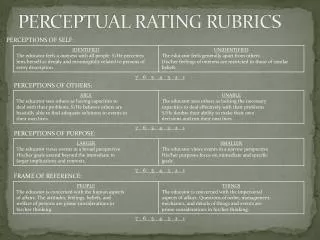
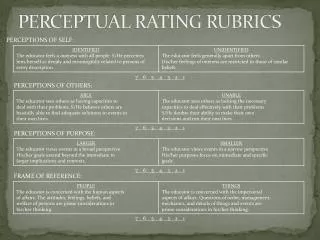
PERCEPTUAL RATING RUBRICS 7 6 5 4 3 2 1 PERCEPTIONS OF OTHERS: 7 6 5 4 3 2 1 PERCEPTIONS OF PURPOSE: 7 6 5 4 3 2 1 FRAME OF REFERENCE: 7 6 5 4 3 2 1 PERCEPTIONS OF SELF:
Using Perceptual Rubrics • Human Relations Incident (HRI) • Classroom Observation • Interview • Self-Assessment
The Dispositions Interview • Begin the interview with usual questions • Treat answers as self-reported information • Get beyond rehearsed remarks and engage in conversation on topics that interest them • Use reflective listening • Allow candidates to ask questions • There are no absolute right or wrong answers
Dispositions About Self • Describe your “perfect day?” • What kind of problems do people bring you?
Dispositions Toward Others • How would your colleagues describe you? • Tell about a situation in which you helped a person or taught a significant lesson.
Dispositions Regarding Frame of Reference • If your life works out the best you can imagine, what will you be doing in 5 years? • How do you maintain a balance in your life between work and play?
Human Relations Incident (HRI) I would like you to think of a significant past event, which involved yourself in a teaching role with one or more other persons. That is, from a human relations standpoint, this event had special meaning for you. In writing about this event, please use the following format: FIRST: Describe the situation as it occurred at the time. SECOND: What did you do in the particular situation? THIRD: How did you feel about the situation at the time you were experiencing it? FOURTH: How do you feel about the situation now? Would you wish to change any part of it?