Understanding Land Biomes and Their Unique Characteristics
This text explores the concept of land biomes, defined by specific physical environments and characteristic assemblies of plants, animals, and climate. It outlines the major biomes of the world, including tropical rain forests, deserts, grasslands, and tundra, each distinguished by unique abiotic factors like temperature and precipitation. Additionally, microclimates, such as oases, offer insight into areas where climate conditions differ from surrounding regions. Transitional areas also play a role in defining these ecosystems, highlighting the complexity of Earth's ecological communities.

Understanding Land Biomes and Their Unique Characteristics
E N D
Presentation Transcript
The Biosphere Land Biomes
Land Biomes BIOME Particular Physical Environment That Contains A Characteristic Assemblage Of Plants And Animals & Climate.
Climate & Microclimate • Climate Determined By Two Factors • Temperature • Precipitation • Climate Is Displayed In Diagram Called A Climatogram
Microclimate Climate within a small area that differs significantly from the climate around it.
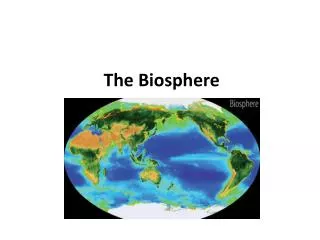
The Major Biomes Key Concept: The worlds major Biomes include: • tropical rain forest • tropical dry forest • tropical savannah • desert • temperate grasslands • temperate woodland & scrubland • temperate forest • NW coniferous forest • boreal forest • tundra
The Major Biomes • Each defined by unique abiotic factors. • Especially climate • Ecological community Each Biome Is Separated By Transitional Areas
Other Land Areas • Some areas do not fit neatly into a specific biome e.g. • Mountain Ranges • Climate changes with elevation • Polar Ice Caps • Ecology limited and unique