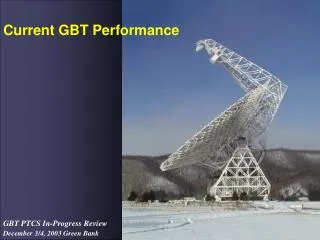
Systematic Analysis of Gravitational and Temperature Effects on Pointing and Focus Accuracy
This study presents a detailed examination of systematic pointing errors associated with gravitational and temperature variations. By rationalizing data acquisition and analysis, and implementing advanced temperature sensors, we aim to refine pointing and focus models. The investigation focuses on using X-band (8-10 GHz) and Ku-band (14 GHz) data to characterize performance and assess the impacts of temperature and gravity. We employ observational strategies such as all-sky pointing and up-down sources to differentiate between these effects, ultimately enhancing data quality and accuracy in observations.
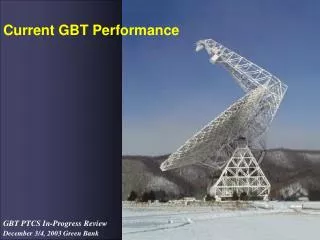

Systematic Analysis of Gravitational and Temperature Effects on Pointing and Focus Accuracy
E N D
Presentation Transcript
Systematic Focus Errors Axial Focus Offset: air temperature versus elevation
Gravitational & Temperature Focus Effects Temperature Effect Gravitational Effect Measure focus over short time period NCP source 0117+8928
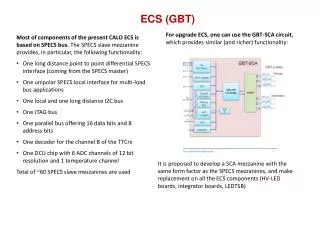
Plan of Attack • Rationalize data acquisition • Rationalize data analysis • Implement temperature sensor system • Concentrate efforts on pointing and focus • Characterize performance with X-band (8 -10 GHz)
Data Quality Gaussian Fits (Az, El, Focus) Polarization (LCP – RCP) Direction (Forward – Backward) Jack Scan
Observational Strategy • NCP source to probe temperature effects • Up-down sources at night to probe gravity effects • All-sky for a combination
Initial Results • All-sky (Az, El) pointing • Removed systematic pointing residuals • Simultaneous fits to gravity and temperature • Separate two effects • Refine focus and pointing models
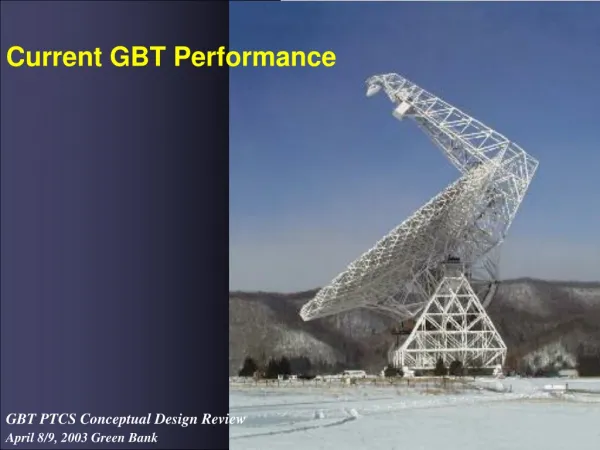
Current Performance • Model: • Simultaneous solution to temperature and gravity effects • Datasets: • All-sky pointing run (2003 Nov 20) • Half-power tracking (2003 Nov 20) • Metrics • Blind pointing • Offset pointing • Continuous Tracking
Current Performance: (NO temperature corrections) Benign Conditions: (1) Exclude 10:00 18:00 (2) Wind < 2.5 m/s Blind Pointing: (1 point/focus) Offset Pointing: (90 min) Continuous Tracking: (30 min)
Data Quality: Pointing (LCP – RCP) Flux (9 GHz) > 0.08 Jy RMS < 2.5 arcsec < 0.03 HPBW
Data Quality: Focus (LCP – RCP) Flux (9 GHz) > 0.08 Jy RMS < 3.8 mm << focus beamwidth
Blind Pointing: 2-D RMS Raw Residuals One PEAK at the start of the evening