Managing Hospital-Acquired Pneumonia with Sepsis: Diagnostic and Treatment Strategies
80 likes | 221 Vues
A 60-year-old male patient with a history of nausea, vomiting, diarrhea, and pneumonia in the hospital has been diagnosed with sepsis. Diagnostic challenges arise due to the need for precise identification of the pneumonia-causing organism, especially with the concern for hospital-acquired infections. Key considerations include empirical antibiotic treatment, recognizing patterns of antibacterial resistance, and responding effectively to possible complications. Emphasis is placed on broad antibacterial spectrums and the importance of continuous lab testing alongside strategies to manage electrolyte imbalances and pulmonary function.


Managing Hospital-Acquired Pneumonia with Sepsis: Diagnostic and Treatment Strategies
E N D
Presentation Transcript
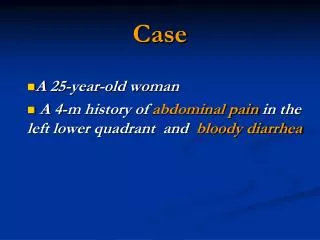
Case # 31M.C., a 60y/o male, has already been experiencing nausea, vomiting & diarrhea aside from having developed PNEUMONIA while in the hospital. Lab exams and his other manifestations revealed that the patient is already suffering from SEPSIS.
Think? INSIDE THE BOX OUTSIDE THE BOX Possible due to?NOT IN OUR HISTORY Dx: Pneumonia (but hospital acquired type in Hx) Gram(-) GIT ?Endotracheal Intubation, nasogastric tubing or enteral feeding ASPIRATION P.:Indwelling catheter Gram(+) nose,Skin ?Bacteria,Viral,Fungi COMMUNITY ACQUIRED P. Other organism 21%P.Aeroginosa,9%Enterobacter or 8%K.Pneumonia
DIAGNOSTIC ACCURACY “controversial” bec. We have to be certain what organism or PNEUMONIA is really present. LAB Dx: endotracheal aspiration, FOB fiberoptic bronchoscope, gram staining, BBS blinded bronchial sampling. Sensitivity of this test ave. 95%
Empirical Antibiotic Tx for HAP • Have to understand the local patterns of anti-bacterial resistance. • If MRSA prevalent in the institution, Vancomycin should be included can also use Quinupristin-dalfopristin and linezolid. • KEY “broaden the spectrum of antibacterial treatment and continued lab testing” • DOC P.Aeruginosa = Carbencillin + Aminoglycoside
STOP! DO NOT FORGET! • SEPSIS most often complication of HAP, so follow regimen for proper medication administration. • Electrolyte imbalance due to vomitting and diarrhea.
Pulmonary Infections • Occurs in: • a. Loss or suppression of cough reflex • b. Injury to the mucocilliary apparatus • c. Interference with the phagocytic or bacterial action of alveolar macrophages • d. Pulmonary congestion and edema • e. Accumulation of secretion