Job Interview Statistics
To navigate modern hiring effectively, candidates must combine thorough preparation with strong communication and a professional presence. Understanding these Job Interview Statistics and Facts can help you approach interviews strategically and confidently, increasing your chances of landing the role you want.<br><br>Explore detailed insights here: https://market.biz/job-interview-statistics/

Job Interview Statistics
E N D
Presentation Transcript
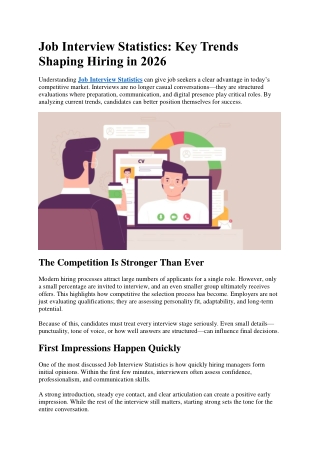
Job Interview Statistics: Key Trends Shaping Hiring in 2026 Understanding Job Interview Statisticscan give job seekers a clear advantage in today’s competitive market. Interviews are no longer casual conversations—they are structured evaluations where preparation, communication, and digital presence play critical roles. By analyzing current trends, candidates can better position themselves for success. The Competition Is Stronger Than Ever Modern hiring processes attract large numbers of applicants for a single role. However, only a small percentage are invited to interview, and an even smaller group ultimately receives offers. This highlights how competitive the selection process has become. Employers are not just evaluating qualifications; they are assessing personality fit, adaptability, and long-term potential. Because of this, candidates must treat every interview stage seriously. Even small details— punctuality, tone of voice, or how well answers are structured—can influence final decisions. First Impressions Happen Quickly One of the most discussed Job Interview Statistics is how quickly hiring managers form initial opinions. Within the first few minutes, interviewers often assess confidence, professionalism, and communication skills. A strong introduction, steady eye contact, and clear articulation can create a positive early impression. While the rest of the interview still matters, starting strong sets the tone for the entire conversation.
Preparation Makes the Difference Lack of preparation is one of the most common reasons candidates fail interviews. Employers expect applicants to understand the company’s mission, services, and industry landscape. Strong preparation includes: Researching the company thoroughly Reviewing the job description in detail Preparing real examples of achievements Anticipating behavioral and situational questions Candidates who align their experience directly with company needs often stand out among competitors. The Impact of Digital Presence Today’s Job Interview Statistics also show the growing importance of online presence. Recruiters frequently review LinkedIn profiles and other public accounts before making hiring decisions. An updated, professional profile that matches your resume reinforces credibility. On the other hand, inconsistent information or unprofessional content can negatively impact your chances. Virtual interviews have also become common, requiring candidates to focus on lighting, background, camera positioning, and internet stability. Technical preparedness is now part of professional preparedness. Multiple Interview Rounds Are Common Many companies now conduct several rounds of interviews before extending an offer. These may include panel interviews, technical assessments, or case studies. This extended process allows employers to evaluate candidates from multiple perspectives. For job seekers, consistency across all rounds is essential. Maintaining enthusiasm and professionalism throughout each stage can significantly improve success rates. Turning Statistics Into Strategy Understanding Job Interview Statistics is not about feeling discouraged—it’s about being informed. When candidates recognize how competitive and structured modern hiring has become, they can prepare more effectively. Focus on building strong communication skills, researching companies thoroughly, refining your digital presence, and practicing structured answers. These actions directly address the key factors that influence hiring outcomes.
Final Thoughts The numbers clearly show that interviews are more strategic than ever before. Success depends on preparation, professionalism, and presentation—not just qualifications alone. By using Job Interview Statistics as a guide, candidates can transform their approach from reactive to proactive. In a competitive job market, knowledge truly becomes power.