Understanding Biomes: Climate, Vegetation, and Ecosystems
A biome is a large region defined by specific climate characteristics and distinct plant and animal communities. The interplay of climate factors such as temperature and precipitation plays a crucial role in determining which organisms can thrive in a particular area. Each biome, from the tundra and desert to tropical rainforests and grasslands, is shaped by its vegetation. This guide delves into the hierarchy of biomes, how latitude and altitude influence climate and vegetation, and the environmental conditions that organisms adapt to for survival in diverse ecosystems.

Understanding Biomes: Climate, Vegetation, and Ecosystems
E N D
Presentation Transcript
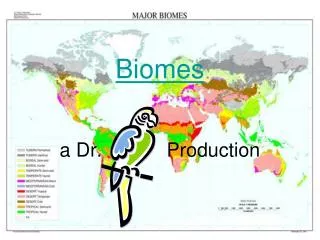
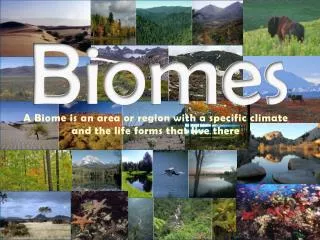
What is a Biome? • A biome is a large region characterized by a specific type of climate and certain types of plants & animal communities. • Described by their vegetation. • Plants that grow in an area determine the other organisms that can live there.
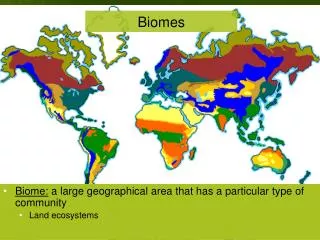
Tropic of Cancer Equator Tropic of Capricorn Semidesert, arid grassland Tundra (polar grasslands) Desert Tropical Rain Forest, Tropical Evergreen Forest Mountains (complex zonation) Taiga (northern coniferous forest ) Temperate Deciduous Forest Tropical deciduous forest Ice Tropical scrub forest Temperate Grassland Savanna Chaparral
Consider this hierarchy model: BIOSPHERE BIOMES SMALLER ECOSYSTEMS
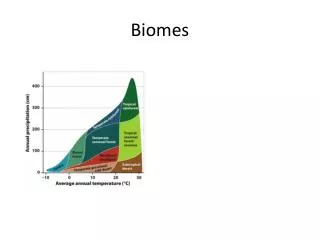
What factors determine which plants can grow in a certain area? • Remember that biomes are defined by their plant life • Climate • Refers to the weather conditions, such as temperature, precipitation, humidity, & winds, in an area over a long period of time. • Temperature & Precipitation • Determines a region’s climate • All organisms need water, and the larger an organism is, the more water it needs.
Tundra Tundra Coniferous forest Coniferous forest Grassland Grassland Deciduous forest Deciduous forest Chaparral Chaparral Savanna Savanna Rain forest Rain forest Tropical seasonal forest Tropical seasonal forest Scrubland Scrubland Polar Subpolar Temperate Desert Tropical Desert
Latitude & Vegetation • Biomes, climate, and vegetation vary with latitude & altitude. • Latitude is the distance north or south of the equator and is measured in degrees. • Altitude is the height of an object above sea level.
Easterlies (from the east) Westerlies (from the west) 60°N Northeast tradewinds 30°N (Doldrums) equator Southeast tradewinds 30°S Westerlies Easterlies 60°S Deflections in the paths of air flow near the earth’s surface Initial pattern of air circulation
Cold Cool Temperate Warm Temperate Tropical (equator) Tropical Warm Temperate Cool Temperate Cold Fig. 6.6a, p. 125 Climate type
MTNs (Ice & Snow) Low Tundra Taiga Elevation Deciduous Forest Tropical Rain Forest High Temperate Deciduous Forest Taiga Tropical Rain Forest Tundra Polar Ice High Moisture Availability Low
Warm ocean current Warm temperate Highland Polar (ice) Cold ocean current Dry Major upwelling zones Subarctic (snow) Fig. 6.4, p. 124 River Tropical Cool temperate
Review • Why is it hard for trees to survive at the tops of very high mountains? • Which biome would you expect to find a warm to hot conditions with a large amount of moisture? • Coniferous trees can be found in both the subartic taiga and in warm chaparral regions. What kind of conditons have these trees in these areas adapted to?