Investigating HMG-CoA Synthase Kinetics: Mutations, Electron Density, and Pathogen Inhibition Potential
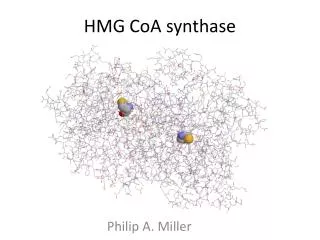
This study explores the kinetics of HMG-CoA synthase with a focus on the Ala110Gly mutation and its effects on enzyme rates. We examine the electron density of the catalytic loop, highlighting key amino acids and their roles in the mevalonate pathway. The research suggests that specific inhibitors targeting this pathway could serve as effective antibacterial agents against pathogens like Enterococcus faecalis, Streptococcus pneumoniae, and Staphylococcus aureus, especially in common infections arising from trauma or surgical procedures, outperforming broad-spectrum antibiotics.

Investigating HMG-CoA Synthase Kinetics: Mutations, Electron Density, and Pathogen Inhibition Potential
E N D
Presentation Transcript
HMG CoA synthase Philip A. Miller
Kinetics - Difference in Rates with Mutation of Ala110Gly
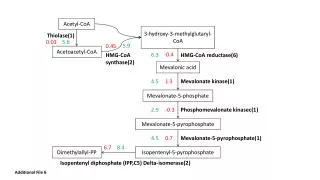
Disease/Infection • Possibility of inhibitors for Mevalonate pathway would serve great as an antibacterial specific for pathogens • Such as Entherococcusfaecalis, Streptococcuspneumoniae, and Staphylococcus aureus • Common infections from trauma or surgical procedures • Specifically targets pathogenic bacterial, significantly more effective than commonly used broad-spectrum antibiotics
References: • Steussy, C., Robison, A.,Tetrick, A., Knight, J., Rodwell, V., Stauggacher, C., Sutherlin, A., (2006) A Structural Limitation on Enzyme Activity: The Case of HMG-CoA Synthase, Biochemistry • Stuessy, C., Vartia, A., Burgner, J., Sutherlin, A., Rodwell, V., Stauffacher, C., (2005) Biochemistry • Sutherlin, A., Hedl, M., Sanchez-Neri, B., Burgner, J., Stauffacher, C., and Rodwell, V. (2002) Journal of Bacteriology • Branden, Carl. Introduction to Protein StructureGarland Publishing, 1991. • Alberts, B., Bray, D., Lewis, J., Raff, M., Roberts, K., and watson J. D. (1989) Molecular Biology of the Cell, Garland Publishing, New York