Understanding Character Power Dynamics in Big Nate
This analysis focuses on the comic strip "Big Nate," summarizing key events and perspectives of three main characters amidst a conflict. The summary outlines the unfolding events using sequential vocabulary, highlighting how each character perceives the problem at hand. It explores who wields the most power in the story and the means through which they acquire it, alongside identifying the character with the least power and the reasons for their position. Additionally, the role of irony in eliciting reader reactions is examined, enhancing comprehension of narrative techniques.

Understanding Character Power Dynamics in Big Nate
E N D
Presentation Transcript
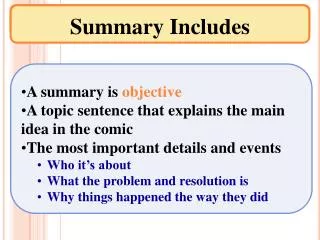
Summary Includes • A summary is objective • A topic sentence that explains the main idea in the comic • The most important details and events • Who it’s about • What the problem and resolution is • Why things happened the way they did
Learning Goal • I will be able to analyze a story and understand how a character’s perspective can give them power. • I will be able to understand how a character’s perspective and their power can impact the conflict
Write a summary of the events in the comic strip using sequence signal words (EXAMPLES: first, next, finally, lastly, eventually, etc.) • There are 3 characters in this story • Write an explanation of each character’s perspective of the conflict • Which character has the most power in the story? • How does he obtain this power? • Who has the least amount of power in the story? Why?
Types of Irony 1. Dramatic: when the audience knows something the characters do not 2. Situational: when the last thing you expect to happen, happens: a surprise ending In the Big Nate comic, what kind of reaction does the irony elicit in the reader?