The Eastern Puma
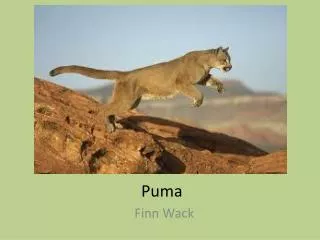
The Eastern Puma, once widespread across North America, is now considered extinct since 2011. These majestic animals spanned 5-9 feet and weighed between 100-200 pounds, primarily preying on deer and other hoofed animals. Despite being a keystone species that regulates herbivore populations, they faced severe threats from hunting, trapping, and habitat destruction. In 1973, they were listed as endangered, yet conservation attempts have failed to materialize since a recovery plan proposed in 1982 remained unimplemented.


The Eastern Puma
E N D
Presentation Transcript
The Eastern Puma By Jack Hayden
Characteristics • 5-9 feet long, weighing 100-200 pounds • Primarily eats hoofed animals such as deer • Will also eat smaller mammals, birds, fish, and arthropods • Lives anywhere from mountains to swamps and forests, and rests in caves • Is a keystone species, despite low population density • Helps to prevent the populations of deer and elk from becoming too large • By regulating the population of herbivores, the puma also assists in keeping vegetation from deteriorating
Endangerment • Put on endangered species list in 1973 • Marked as endangered wherever found (Eastern North America) • Considered extinct as of 2011
Where in the world is the Eastern Puma found? • Stretches across North America and Central America from southern Canada to the tip of South America • Has occupied every eastern state at some point • One of the most widely distributed land animals
Why is the Eastern Puma endangered? • Pumas were killed by early settlers who saw them as a danger to livestock • Continuously hunted and trapped until almost complete eradication • Hunting promoted by state bounty rewards • Habitat destroyed by deforestation, which also affected the deer population (their main source of food)
How many individuals remain? How long before extinction? • The Eastern Puma is considered extinct as of 2011.
How is the Eastern Puma important to the world? • The Eastern Puma provided stability throughout the North American continent, as it was a predator of herbivores such as deer that need to be controlled.
What is being done to help revitalize the species numbers? • Currently nothing, as they are non-existent • In 1982, a plan for recovering the Eastern Puma population was created that involved four steps: “develop adequate search techniques, train appropriate State and Federal personnel in search techniques, assign search priorities, perform systematic searches” • None of the four steps of this plan were even started
What can be done to further help the species or ensure its survival? …
How successful are the current efforts? • The plans to recover the puma included research on the animal, locating and protecting select specimen, and taxonomic evaluations in order to develop a permanent management plan. • The plans were never put into action.
Works Cited • FWS. (2014, January 30). Eastern Puma. Retrieved January 30, 2014, from U.S. Fish and Wildlife Service: http://ecos.fws.gov/speciesProfile/profile/speciesProfile.action?spcode=A046 • Mark McCollough, M. M. (2011, December 21). U.S. Fish and Wildlife Service concludes eastern cougar extinct. Retrieved 1 30, 2014, from U.S. Fish and Wildlife Service: http://www.fws.gov/northeast/ECougar/newsreleasefinal.html • FSW. (1981, August). Recovery Plan Eastern Puma. Retrieved January 30, 2014, from U.S. Fish and Wildlife Service: http://ecos.fws.gov/docs/recovery_plans/1982/820802.pdf • The Cougar Fund. (2014). Cougar Conservation. Retrieved January 30, 2014, from The Cougar Fund: http://www.cougarfund.org/conservation/conservation/