Understanding the U.S. Constitution: Key Provisions and Government Structure
This concise overview of the U.S. Constitution delves into essential elements such as representation in the House based on population, the age requirement for House members, and the types of laws that must originate in the House, particularly revenue laws. It details the impeachment process carried out in the Senate, the election and term of the President, the roles of the Vice President, and the powers granted to the President, including the appointment of justices and cabinet members. Crucial amendments, including rights related to trial by jury and due process, are also highlighted.

Understanding the U.S. Constitution: Key Provisions and Government Structure
E N D
Presentation Transcript
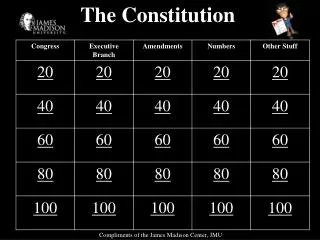
The Constitution Compliments of the James Madison Center, JMU
The basis for representation in the House population
Type of laws that must start in the House Revenue (taxes and spending)
The kind of trial carried on in the Senate Impeachment
How senators are chosen, according to the original Constitution. By state legislatures
The only real job for the Vice President President of the Senate
How the President is chosen electors
The President’s term of office 4 years
The The First power of the President Commander in Chief of the Armed Forces
People that the President appoints. Justices, ambassadors, members of his cabinet
Freedom of the Press First
Right to trial by jury Sixth/Seventh
How long someone must live in the U.S. to become President 14
How much of both houses must vote for passage in order to override a veto 2/3
How many states must vote for an amendment in order for it to take effect. 3/4
How many states needed to ratify the Constitution in order for it to approved 9
He fills in for the VP when the he is not present in the Senate President Pro tempore
The type of jurisdiction the Supreme Court usually has Appellate
The type of government all states must have republican
A law that makes you guilty for a crime you committed before the law was passed. Ex post facto law
The powers that Congress does have are called this Enumerated powers