The Outbreak of World War II: Europe's Path to Conflict and America's Growing Involvement
On September 1, 1939, Germany invaded Poland, prompting Britain and France to declare war, marking the onset of World War II. The Axis Powers, led by Germany and Italy, faced the Allies, comprised of Great Britain and France. Although President Roosevelt initially declared the US neutral, he provided support to Britain through programs like Cash and Carry and Lend-Lease. As the war escalated, especially with Japan's entry into the conflict, American policy shifted from neutrality to active involvement, laying the groundwork for future engagement in both Europe and the Pacific.

The Outbreak of World War II: Europe's Path to Conflict and America's Growing Involvement
E N D
Presentation Transcript
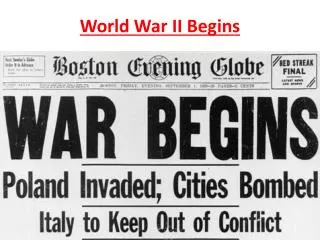
I. Europe at War Again • September 1, 1939, Germany invaded Poland. Britain and France declared war on Germany. WW II had begun • Axis Powers – Germany and Italy/Allies – Great Britain and France • President Roosevelt declared the US neutral; yet extend aid as much as possible • 1940, Hitler invaded Norway, Denmark, the Netherlands, and Belgium. By June 1940 Germany had conquered France; leaving Great Britain to battle the axis powers alone
II. America Abandons Neutrailty • President Roosevelt transferred 50 old WW I destroyers to Great Britain – Cash and Carry • Battle of Britain • Germany continuously bombed Great Britain; RAF kept Germans from gaining control • 1940, Roosevelt wins a third term • Defeated Wendell Wilkie • Most Americans did not want to gamble on change of leadership • Lend-Lease Act • Lend goods to Britain; return or replace after the war • Ships were assigned to protect ships carrying lend-lease supplies
III. Aggression in the Pacific • 1940, Japan joined the Axis powers; US responded by cutting off exports of scrap metal to Japan • 1941, Hideki Tojo favored war to eliminate the US and British influence in Asia