Download
1 / 12
120 likes | 257 Vues
The respiratory system plays a vital role in our survival by transporting oxygen from the environment into the body while removing carbon dioxide and water. This process of respiration is crucial for energy production in cells, where oxygen and glucose react chemically. While breathing is simply the act of moving air in and out of the lungs, understanding this system's mechanics is essential, especially in extreme conditions such as space and deep-sea diving, where astronauts and divers rely on oxygen supplies for survival.

E N D
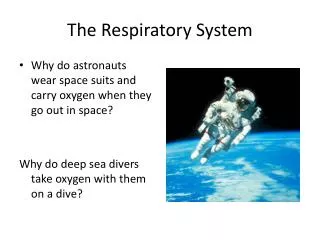
The Respiratory System • Why do astronauts wear space suits and carry oxygen when they go out in space? Why do deep sea divers take oxygen with them on a dive?
The Respiratory System Functions • The respiratory system moves oxygen from the outside environment into the body. • It also removes carbon dioxide and water from the body.
Respiration: What is it? • Respiration is the process by which oxygen and glucose (sugar) go through a chemical reaction inside cells. The chemical reaction releases energy that the cell uses.
Breathing – it is not the same as respiration • Breathing is moving air in and out of your lungs. • http://www.broncus.com/patients.asp
Air • Air is made up of a mixture of gases. • 21% oxygen • 78% nitrogen • 1 % carbon dioxide, helium and other gases. • What is most of the air you breathe?
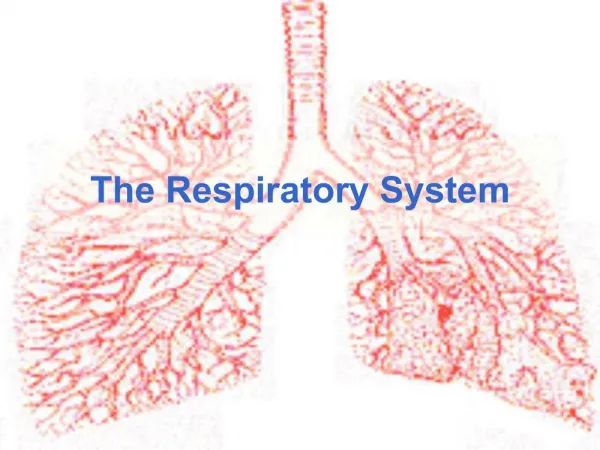
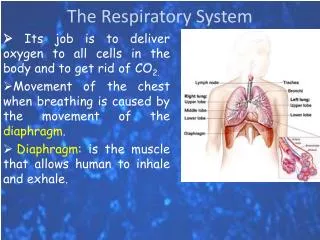
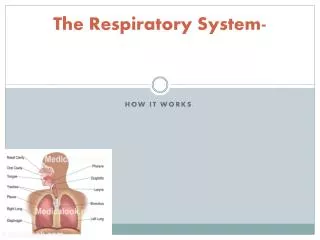
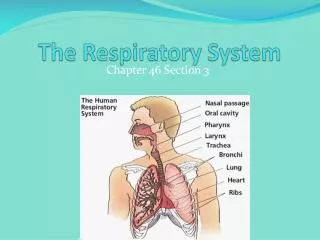
The Path of Air As air travels from outside, it travels through the nose , pharynx, larynx, trachea and bronchi and bronchioles to the lungs www.phschool.com (pharynx)
The alveoli The alveoli are tiny air sacs in the lungs
Gas Exchange in the Lungs animation of gas exchange
The diaphragm http://www.phschool.com/webcodes10/index.cfm?fuseaction=home.gotoWebCode&wcprefix=cbp&wcsuffix=0373
AnatomyofBreathing http://www.phschool.com/atschool/phsciexp/active_art/respiratory_system/index.html