Digestive System
Learn about the processes of digestion in the digestive system, including ingestion, peristalsis, digestion, absorption, and defecation. Explore the different organs involved and how they contribute to the overall process.

Digestive System
E N D
Presentation Transcript
What is Digestion?? • Processes that changes food into simpler forms that can be absorbed thru cell membrane (mechanical means and chemical) What are these processes? • Ingestion • Peristalsis • Digestion • Absorption • Defecation
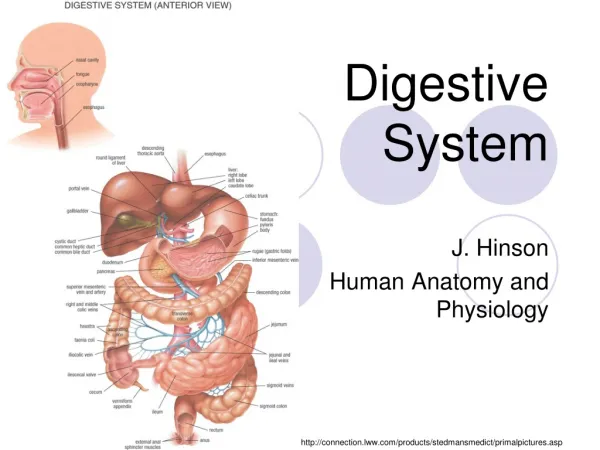
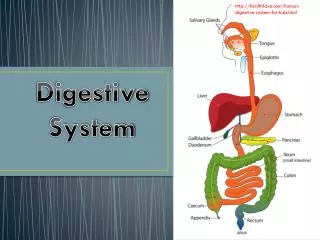
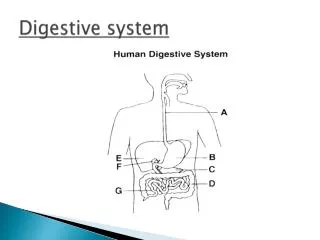
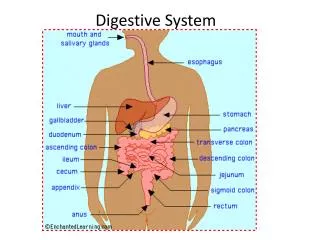
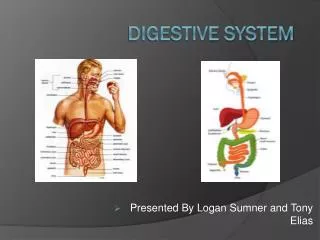
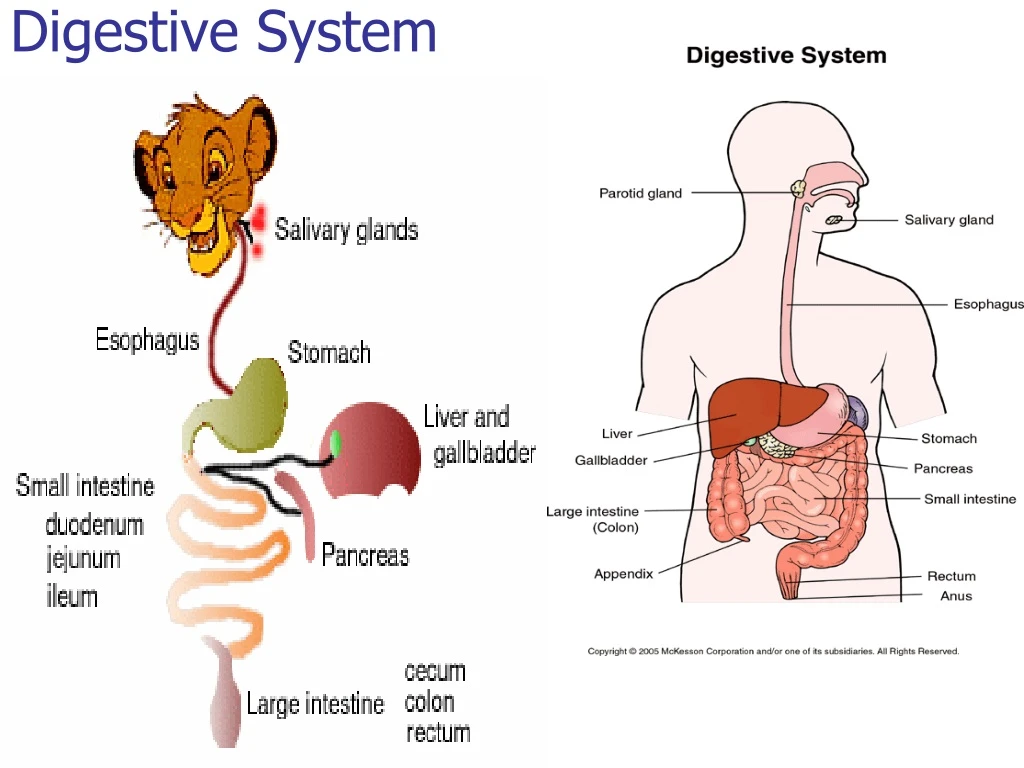
Alimentary canal Mouth Pharynx Esophagus Stomach Small Large intestines Accessory Organs Salivary glands Liver Gallbladder Pancreas Two Categories of Organs
Alimentary Canal • 9 meters long!! • Large intestines: 1.5 m (~5 feet) • Small intestines: 6 m (~20 feet) • Originates from the endoderm of the embryo
FXN: moves food. HOW? 1. Mixing movements • Smooth muscle contract rhythmically (every 20 sec or so) in the circular muscle layer • Food + digestive juices + mucus 2. peristalsis • Wavelike movements propelling movements • A ring of contractions begin when food expands the tube in the longitudinal layer
Mastication • Mechanical digestion mixing with saliva
Incisors: 8 Teeth Cuspids (canines): 4 bicuspids (premolars): 8 Molars: 12
Pharynx • Passageway of food into esophagus and air into larynx/trachea • swallowing mechanism (deglutition) • Involuntary Made of muscles called constrictor muscles (pull walls inward during swallowing)
Swallowing Steps • Chew food and mix with saliva into a bolus: voluntary • Food reaches the pharynx and stimulates sensory receptors: involuntary reflex • Soft palate rises inhibits food from entering… • Epiglottis closes over larynx (no breathing) • Muscles in lower pharynx relax • The constrictor muscles contract and stimulates peristaltic waves • Esophagus opens
Esophagus • Straight tube: 25 cm long • Penetrates through an opening: esophageal hiatus (continuous with stomach) • Passageway for food from pharynx to stomach • Contains many mucus glands • Movement of food: • Gravity • Peristaltic waves meet the esophageal sphincter which regulates food into the stomach
Barrette’s esophagus • the abnormal growth of intestinal-type cells from the stomach border, into the esophagus.
How do we know physiology of the Stomach? • 1822: Alexis Martin • Shot himself in the stomach • Left a fistula • Army surgeon studied 8 years • 1984: Barry Marshall from Australia • Hypothesized that bacteria caused gastritis and ulcers • Drank swamp water • Heliobacter pylori IN conclusion: Discoveries are made through observations and experimentation of bizarre phenomenon
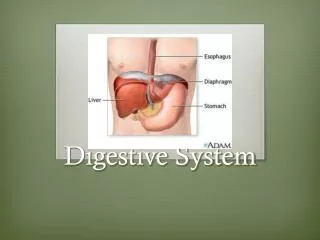
Stomach characteristics • J shaped, 25-30 cm long • Under diaphragm on left side • Hold up to 1 liter of contents • Internal Characteristics: • Rugae: mucosal folds • What is the benefit of these folds? • Gastric villi aid in secretion and absorption of gastric juices
Parts of Stomach • Cardiac region • Around esophagus • Fundic • Large ballooned area • Pyloric • Near duodenum • Contains pyloric sphincter muscle
Contents of Gastric Juices • Mucous • Lubricates and protects stomach wall • Prevents pepsin from digesting the protein in stomach wall • Pepsin-most active in acidic environment • Digests proteins into peptides
Contents of Gastric Juices • HCl • Denatures proteins and kills microbes • Intrinsic factors • Aids in absorption of Vit B 12 • Gastrin • Regulatory hormone: regulates contents of stomach to the small intestines
Gastric Cells • Mucus cells: secrete mucus • Chief cells: secrete pepsinogen • Pepsinogen vs. pepsin • Parietal cells: secrete HCl and intrinsic factor • G-cells: secrete gastrin
Regulation of Gastric Secretions • Gastric juice produced continuously • Rate controlled • Neurally- parasympathetic • Acetylcholine- inhibits stomatostatin • Hormonally • Stomatostatin- inhibits acid secretion • Gastrin- increases gastric gland secretion
Phases of Gastric Secretion • Cephalic Phase • Sight, taste, smell, or thought of food • Gastric juice secreted • Gastric Phase • Food enters stomach • Stimulates release of gastrin • Intestinal Phase • Food enters small intestine • Intestinal gastrin released
Gastric Absorption • Stomach • Some water, certain salts, lipid-soluble drugs • Small Intestine • Most nutrients absorbed • Large Intestine • Water, salt
Mixing and Emptying Actions • Chyme • Semifluid paste of food particles and gastric juice • Peristaltic waves- mixes food • Pyloric Sphincter relaxes
Mixing and Emptying Actions • Liquids- rapidly • Solids- remain until well mixed • Fatty foods- 3-6 hours • Proteins- move quickly • Carbohydrates- more rapidly than proteins or fats
Digestion Animation • http://highered.mcgraw-hill.com/sites/0072495855/student_view0/chapter26/animation__organs_of_digestion.html • http://health.howstuffworks.com/adam-200142.htm • http://www.constipationadvice.co.uk/constipation/constipated-digestive-system.html