The Importance of Science Fairs: Engaging Students in Scientific Inquiry
Science fairs play a vital role in stimulating student interest in science and engineering. They encourage the application of the scientific method, promote originality, and enhance understanding of scientific processes. Through hands-on projects, students develop critical skills such as problem-solving and investigative thinking. A successful science fair not only fosters creativity and deeper comprehension of scientific concepts but also builds a positive attitude toward science. Join us at the LGMS Science Fair for a showcase of innovation and learning!

The Importance of Science Fairs: Engaging Students in Scientific Inquiry
E N D
Presentation Transcript
What is the Point of this? There are five important points to why the science fair is important.
Five Points • To engage the interest of student to work with the scientific method. • To understand science in a new way • To possibly become a scientist or an engineer. • To help maintain the scientific lead and prosperity of our nation • Hopefully, transfer that prosperity to the whole world.
ATypical Science Fair • Too little originality and planning • Too many projects hastily constructed a few nights before the fair opened. • Projects that bear the unmistakable signature of Mom or Dad • Copy of projects from the Internet • Low level of participation by a single class or an entire school.
The LGMS Science Fair • Greater student participation • Grater creativity, originality, and overall quality • Greater use of investigative skills and problem-solving activities • A more positive attitude toward science. • Participants will develop a deeper understanding of scientific process
What Is A Science Fair Project? • Through the development of a project you will gain firsthand appreciation of the work of scientist and the values of their discoveries. • Your project allows you to experiment, make decisions, form and reform hypotheses, test and examine ideas, seek solutions, and most important, learn more about yourself and the world.
Project Has 8 Main Parts • Research of a topic • Develop a hypothesis • Plan and carry out an experiment • Maintaining a log book (hard composition) • Taking pictures of experiment • Graphing results • Create a Display Board • Complete Written Report
Keys to a Successful Project • Does the project represent your own work? • Is the project the result of careful planning? • Does the project demonstrate the student’s creativity and resourcefulness? • Does the project indicate a thorough understanding of the chosen topic? • Does the project include the log book, display and final report?
Does the display board include visual aids such as pictures and graphs? • Are all lettering on the display neat and accurate? • Does the project meet all safety requirements? • Is all information accurate? • Does the display present a complete story?
Help Selecting the Topic • Interests (select a topic you enjoy) • Difficulty Level (not too easy yet not too hard) • Time (can you get it done in 12 weeks) • Materials (what special materials do you need) • Guidance (how much help will you need) • Safety (will you be able to follow all safety rules)
What If? • It is important to remember that there are no right or wrong answers to “what if” questions. They help you look at science with a creative eye, to think about possibilities rather than absolutes. • These types of questions can help you develop a topic you are interested in .
Experiments • The type of project you must present must have an experimental design. This requires you to pose a problem, design and experiment to investigate that problem, record, and report your results, and make conclusions based upon your results.
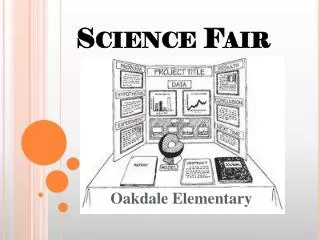
Display Board • A display board will be provided to you unless we have more than 50 projects. • The board will include a display of the steps you took and the data • Remember you must have visuals including pictures. You are not allowed to have any equipment in front of you board. Only your log book, and notebook with research paper. • We will discuss how exactly to place items on the display board later.
Research • During your research you will investigate a chosen area of science by consulting primary sources. You need to consult reading materials from libraries, government agencies and the Internet. • You can interview experts like scientists, healthcare workers, or county agents etc. • You are exploring a scientific area in depth and detail and reporting your finding.
Conducting Research • Before you begin the project you need to research a wide variety sources to get background information. This will help you ensure a through understanding of your topic. • The school library is a place to begin but you should explore the public library, a nearby college or university, local laboratory, newspaper offices, city or county agencies.
Investigate Materials to use Places to go • Encyclopedias • Dictionaries • Textbooks • Graphs • Magazine and Professional Journals • Pamphlets • Records • Newspaper files • Scientific Societies • Pumping Station • Chamber of Commerce • Zoo • Botanical Garden • Food Processing Plant • Computer Databases • Wild Life Preserves • TV /Radio Station
People to See • Science Teachers • Professors • Electricians • College Students • Veterinarians • Computer Operators • Musicians • Environmentalist • Doctors/Nurses • Biologist
Science Fair Dates LGMS Fair Henry County Fair • Jan. 18th, 19th and 20th, 2011 • Feb. 3, 2011 • Also on Sept. 30, 2010 you may attend a coaching session for the fair at Ola Middle School at 6:00 p.m.
12- Week Timetable • You will be provided a timetable today and we will review it together and complete the dates. • Also, for each week you must show me that you have completed the items for that week in order to get a grade. You will have 12 grades, one research paper grade, and a grade for your display. • You also will receive bonus points for your participation. • Finally, a second power point will provide further directions later.