Download
1 / 6
60 likes | 170 Vues
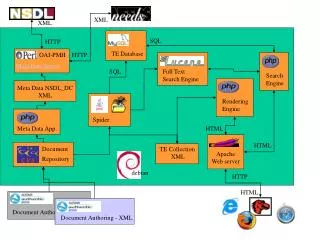
This overview explores the key heuristics that search engines use to sort results. We delve into word-based metrics like frequency and position, HTML features such as emphasis and headers, and URI elements including server names and URLs. Notably, PageRank plays a vital role in determining relevance. We also discuss the importance of anchor text and the interconnectedness of pages, images, and documents. Finally, we explain search algorithms and indexing strategies, highlighting how search queries are processed and sorted for optimal results.

E N D
Search Signals • “Heuristics” which allow for the sorting of search results • Word based: frequency, position, … • HTML based: emphasis, Header • URI based: server name, URL • Page based: Not dependent on the Search term, but on the page features • PageRank the most important • Search results are a combination of these
Anchor text • Other pages, images, documents, etc. are linked via “anchors” • E.g. <a …>, <img …>, etc • Text around the anchor describes the linked page • <a href=“http://www.cowabduction.com”> UFOs are stealing our cows! </a> • These words index to the LINKED page
Search “algorithm” • Single or multi-word • For every word in query • Find the pages the word occurs on and compute • Group 1: Pages with all those words (intersection) • Group 2: Pages with any of those words (union) • For every page in the returned set • Sort by formula • k1 * signal1 + k2 * signal2 + … +kn * signaln • (k’s sum to 1 is advantageous computationally)
Indexes • Search index • For every page, what words occur on that page • Plus “features” of word occurance (location, html, etc) • Inverted (reverse) index • For every word, what pages it occurs on
Summary • http://www.youtube.com/watch?v=fnSJBpB_OKQ