French and Indian War
110 likes | 238 Vues
The French and Indian War, part of the Seven Years War, arose from the competition between France and England for control of North America. Tensions escalated as both nations pushed into the Ohio Valley, leading to conflicts like the Battle of Jumonville Glen in 1754. The war resulted in Britain's victory, significant territorial changes, and mounting debt, prompting new taxation and colonial unrest. The Proclamation of 1763 aimed to appease Native Americans but ignited further hostility among settlers, culminating in civil disobedience and unrest in the colonies.


French and Indian War
E N D
Presentation Transcript
French and Indian War Version 2
Causes of the War • France and England were in a conflict known as the Seven Years War • Both competed for control of North America • Both French and English settlers started moving into the Ohio Valley • Both nations felt the land was rightfully theirs
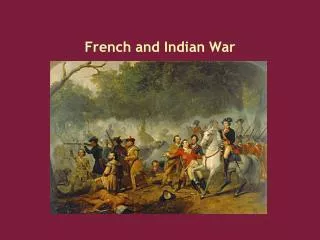
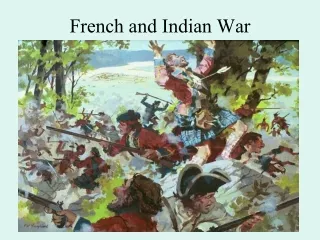
The French and Indian War Begins • In 1754, English forces under George Washington march to Fort Duquesne to oust the French • On the way, they massacre a French scouting party near present-day Uniontown, Pennsylvania in what is known as The Battle of JumonvilleGlen • Fearing a counter attack, Washington ordered the construction of Fort Necessity • The French send 600 soldiers and force Washington to surrender the fort • The French and Indian War had begun
Effects of the War • Britain defeats France • France is expelled from the New World including all of Canada. • France agrees to stay out of India, which made Great Britain the supreme military power in that part of Asia • Spain gets Louisiana Territory
After the War • Britain is left with a huge debt and a desire to avoid costly conflicts in the future • British mercantilism results in colonial smuggling • Needing money, Britain enforces laws like the Sugar Act, the Stamp Act, the Towsend Act and the Tea Act
Pontiac’s Rebellion • Britain stops trading with the natives • Natives attack forts and colonists
Proclamation of 1763 • England issued the Proclamation of 1763, which restricted settlement west of the Appalachian Mountains in an attempt to appease Indians who had developed positive relations with France. • Westward-bound settlers, however, ignored the proclamation and moved into Indian lands. • This act will create hostility among Americans who believe they have a right to the lands west of the Appalachians
Colonial Reaction • No taxation without representation • Boycotts • Stamp Act Riots- Result in civil disobeedience and harrassment of tax collectors • Boston Tea Party- act of civil disobedience where the Sons of Liberty dress as Indians and dump tea into the Boston Harbor in potest of the Tea Act
England Responds to the Colonies • England punishes the Bostonians with the Intolerable Acts • Closure of Boston harbor • Quartering Act requiring colonists to provide housing for British soldiers