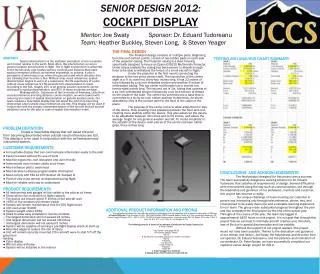
Enhancing Safety with Updated Cockpit Information Display
100 likes | 122 Vues
Improve the current icing potential and turbulence analysis provided to pilots with updated cockpit-based display. This tool supplements AIRMETs and SIGMETs, enhancing operational use and promoting safety through accurate forecasts and intensities. Pilot inclusion and training are crucial aspects of this development.


Enhancing Safety with Updated Cockpit Information Display
E N D
Presentation Transcript
Cockpit-based Dissemination/Display Tenny Lindholm
CIP, FIP, GTG • Problem: The [CIP, GTG] is an automatically generated product that supplements AIRMETs and SIGMETs by identifying areas of [current icing potential, turbulence], but it does not substitute for the intensity and forecast information contained in AIRMETs and SIGMETs. It is authorized for operational use by meteorologists and dispatchers. Pilots?
Other issues • Products may be first approved for dispatchers and meteorologists as a guidance product • Planning for pilot use in a reasonable time is needed • Already included in “all available information” category in 91.103 • Need to develop criteria for pilot operational use that address safety and science • Improve CIP/FIP, making products “reasonably accurate” out to 6 hours
What is being done • Scientific verification of current CIP • Ongoing • Operational application of things like “icing potential”- need intensity • Intensity algorithm in development—AWTT “experimental” status planned for Spring 2004 • Verification will follow • Establish concept of use within the current NWS AIRMET and SIGMET framework • Discussion with NWS—HIML/HIFL, bless 4-D grids as the official operational product • Pilot training and AIM