Pasta PowerPoint Notes
Pasta PowerPoint Notes

Pasta PowerPoint Notes
E N D
Presentation Transcript
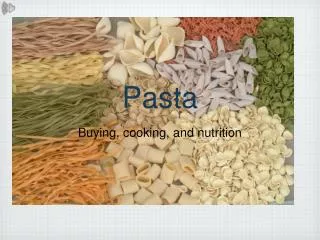
Pasta vs. Noodles Pasta: Made from semolina, which comes from the insides of durum wheat(the most durable type of wheat) Noodles: Made by adding eggs to the pasta dough
How It’s Made Commercially: By large machines At Home: By hand or by pasta machine
Cost • Most dried, boxed pasta is low in cost (And a little goes a long way!) • Fresh or gourmet pastas can be more expensive (Think Buitoni pastas in the dairy section)
Storage • Dried pasta should be stored in an air-tight container, to avoid getting stale or wet • Stored pasta will keep for about one year • Never store cooked pasta together with liquid Why?
Cooking Starches • During cooking, starch granules absorb the water and swell • This causes an increase in volume and the granules to soften (gelatinization) • Check pasta package for correct proportion of water to use and cooking time
Preparing Pasta • Bring 2 quarts of water to boil for every 8 oz. of pasta you’re preparing (2 qts : 8 oz) • Pasta should be allowed to move freely as it cooks, so use an appropriately sized pot! • Pasta should be cooked until firm, but not hard (al dente: “to the tooth” )
And a Little of This… Add salt as you’re bringing water to a boil… Why? Add olive oil to boiling pasta… Why??
1 cup enriched spaghetti: 220 Calories 1 gram Fat 43 grams Carbs 3 grams Fiber 8 grams Protein 1 cup whole wheat spaghetti: 174 Calories 1 gram Fat 37 grams Carbs 6 grams Fiber 7 grams Protein Nutrition
Carbs: The Good, the Bad, and the Ugly “Good Carbs” = Whole Grain/Complex Carbs Whole grains, pastas, and breads are high in fiber and nutrients and provide energy Complex carbohydrates stabilize blood sugar levels instead of spiking them “Bad Carbs” = Enriched Foods and Refined Sugars (white bread, enriched pastas, candy, soda)