Download
1 / 15
150 likes | 254 Vues
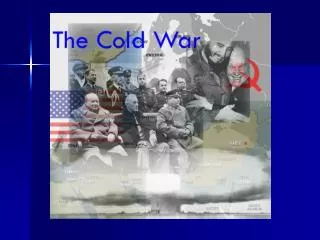
This piece explores the tension between the US and the USSR from the Russian Revolution through the early Cold War period. It highlights the US's initial refusal to acknowledge Russia until 1933, the Red Scare, and the pivotal events of WWII, including the battle of Stalingrad and the atomic bomb's role as a deterrent. It discusses strategic policies like the Marshall Plan, the defense budget surge post-1949, and America’s response to communism, culminating in the military-industrial complex that redefined US priorities through the ensuing decades.

E N D
Tension • US refuses to acknowledge the existence of Russia after the Russian Revolution until 1933 • US Red Scare 1917 and unions • WWII 800,000- million at Stalingrad
Nuclear Monopoly Broken Bomb used as a deterrent until… August 1949=Joe 1 We have the bomb also!
Civil War in Greece 1947 We are leaving!!!!!!!!!!
Americans must fight communism on all levels. We must support free peoples who are resisting attempted subjugation by armed minorities. March 12, 1947
Two weeks Later I am George Marshall Secretary of State. Look Europe is destroyed and needs outside capital (money). If we do not help rebuild they will. And….
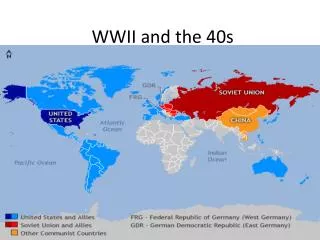
Berlin 1949 We will supply Berlin or block off your access to Berlin.
China Falls October 1, 1949 I am Chiang Kai Shek and I am a Chinese nationalist. Look at my allies Roosevelt and Churchill in 1943. I am Mao Zedong and I represent the people. I am fighting for the poor peasants!
In 1949, China has Fallen! Russia has just tested a nuclear bomb! Do Something!!!!
NSC-68 The Kremlin is trying to expand. We should devote money to military. Increase the defense budget! Stop communism before if expands! 20% of GNP will be defense related
Impact • 1952 US detonates Hydrogen Bomb • Defense budget increases • Arms race begins Long Term • Military Industrial Complex • In 2011=712 Billion • US spends more than next 13 nations