Predator-Prey Adaptations: Evolutionary Strategies in Community Ecology
140 likes | 252 Vues
This chapter explores the fascinating adaptations of predators and their prey within community ecology. It highlights how natural selection drives the evolution of features such as the sticky webs of spiders, the sharp teeth of wolves, and the speed of cheetahs that optimize hunting efficiency. Prey species, in turn, develop defenses like skunk spray, porcupine quills, camouflage, and chemical defenses to survive. The chapter also discusses symbiotic relationships including parasitism, mutualism, and commensalism, unveiling the ecological dynamics that shape interactions in nature.


Predator-Prey Adaptations: Evolutionary Strategies in Community Ecology
E N D
Presentation Transcript
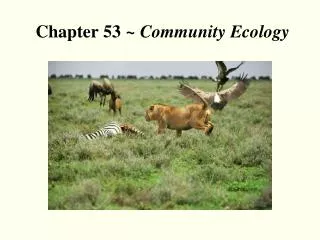
Adaptations of Predators • Spiders Sticky Web • Wolf’s teeth- made for cutting flesh • The speed of a cheetah • Natural selection favors the evolution of predator adaptations for finding, capturing, and consuming prey.
This angler fish lives so deep down in the ocean that no light can penetrate the depths. • To attract prey it has adapted the structure above its mouth to glow and wiggle like a worm. • When prey get close enough the sharp, needlelike teeth are adapted grasp and kill the prey
Adaptations of Animal Prey • Skunks spray a pungent odor. • Porcupines have defensive quills.
Adaptations of Animal Prey • Deceptive Markings- one species closely resembles another species.
Adaptations of Animal Prey • Camouflage- imitate objects to blend in with its environment
Adaptation of Plant Prey • Physical Defenses • Thorns, spines, sticky hairs, tough leaves
Adaptation of Plant Prey • Chemical Defense- Poisons or bad tasting • Ex: Poison Ivy
Symbiosis… • Close, long-term relationship between two organisms. • 3 examples include: • Parasitism • Mutualism • Commensalism
Parasitism… • Similar to predation in that one organisms called a host, is harmed and the other organism, called the parasite, benefits. • Parasite feeds on the host for a long time. • Parasitism usually doesn’t result in immediate death of the host. • Ex: Endoparasites- heartworms, tapeworms • Ex: Ectoparasites- Lice, leeches, fleas, ticks
Mutualism… • Two species that derive some benefit from each other. • Ex: Pollination
Commensalism… • Interaction in which one species benefits and other is not affected. • Ex: Species that scavenge for leftover food • Ex: Cattle Egrets, Sucker Fish
Defenses we have against Parasites… • Skin • Tears • Saliva • Mucus • Cells of our immune system that attack parasites