Comprehensive Guide to Literature Search Techniques in Language Learning Research
This guide offers a structured approach for effectively searching literature in the field of language learning, specifically targeting foreign language pedagogy in high school settings. It emphasizes the use of handbooks and encyclopedias for obtaining an overview of the subject, as well as collecting central references. It outlines various search methods, including Citation Pearl Growing and structured searches, and encourages recording search processes for improved efficiency. Explore databases and utilize known literature to facilitate and refine your search for relevant studies and sources.

Comprehensive Guide to Literature Search Techniques in Language Learning Research
E N D
Presentation Transcript
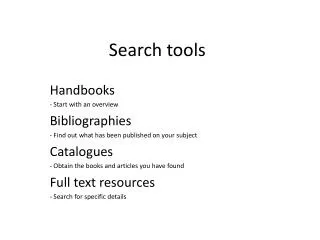
Search tools Handbooks - Start with an overview Bibliographies - Find out what has beenpublished on yoursubject Catalogues - Obtain the books and articlesyou have found Full textresources - Search for specificdetails
Using handbooks An article from a relevant handbook or encyclopediacan give youthreethings: • An overview of the subject. • A list of central references on the subject. • Lots of inspiration for searchablesubjectwords. Find handbooks and encyclopedias in ”Databaselisten”.
Search methods • Citation Pearl Growing • Quick’n’Dirty • Structuredsearch
Citation Pearl Growing Use the List of References in books and articlesyou have read. • Look up the book/article in catalogues or databases again. • Use Codes, SubjectHeadings etc. in the description, to find similarsources.
Quick’n’Dirty If youdon’t know if there is anything to find (or how to find it) • Search with the terms you have. Try manydifferent databases. • Use the resultsyouget, to getwiser on relevant subjectwords and relevant databases.
Structured Search 1 Whenyou have localized the relevant databases and subjectwords, youcanmake a thoroughsearch for literature. • Chooseyoursubjectwords • Considerusing synonyms • Considerlanguage and otherlimiters • Constructyoursearch argument
Structuredsearch 2 Main subject Area of focus Limiters
Structured Search 3 Final thesissubject: Fremmedsprogspædagogik. Mere præcist noget om sprogindlæring på gymnasier.
Structuredsearch 4 Second language Learning High School
Structuredsearch 5 Fremmedsprog Andetsprog Second language Foreignlanguage Indlæring Tilegnelse Learning Acquisition Gymnasium HF Highereducation College/High school Consider at the same time more limiters for Language, Country/Nationality, Time period, Actuality
The Search process 1 Keep a log book on yoursearchprocess. Write down: • The name of the source (database etc.) • Yoursearch argument(s) • The results of yoursearch
The Search process 2 • Handbooks • Establish an overview over subject and keyliterature • Handbooks and Quick’n’Dirty • Establish an overview over relevant searchwords • Citation Pearl Growing and Peers • Takeadvantage of whatyouallready know • Structured Search • Construct a search argument • Catalogues • Get hold of the relevant literature
Summing up… • Searching for relevant literature is chaotic and frustrating… • Considerwhich kinds of materialsyouaresearching for, and choose the relevant sources/databases. • Start with handbooks and encyclopedias. • Useknownliterature to get ”more of the same”. • Try different databases and subjectheadings. • Log whatyouaredoing. • UseStudy Metro, Scribo etc. • ..and of courseuseus for help!