Understanding the Binomial Nomenclature and Classification of Living Organisms
This document outlines the binomial nomenclature system, introduced by Carl Linnaeus, which provides a universal naming convention for living organisms using two names: the genus (capitalized) and species (lowercase), both italicized or underlined. It details the hierarchical classification of life into kingdoms, phyla, and further subdivisions, distinguishing among various plant and animal phyla through external characteristics. Additionally, it includes activities to design a key for identifying up to eight organisms, reinforcing the practical application of taxonomic principles.

Understanding the Binomial Nomenclature and Classification of Living Organisms
E N D
Presentation Transcript
Classification 5.5
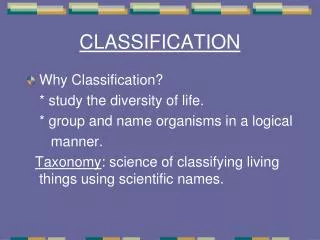
5.5.1: Outline the binomial system of nomenclature • Binomial nomenclature: 2-names • Homo sapiens (Genus species) • Genus is always capitalized • Species is always lower case • Name is always italicized or underlined • Linnaen system: organize organisms and universal naming system
Kingdom Animalia Plantae Phylum Chordata Angiospermae Class Mammalia Dicotyledoneae Order Primate Rosales Family Hominidae Papilionaceae Genus Homo Pisum Species sapiens sativum 5.5.2: List seven levels in the hierarchy of taxa
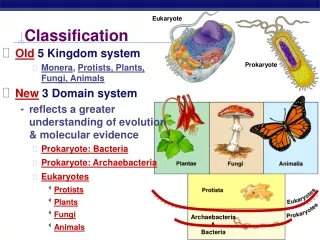
5.5.3: Distinguish between the following phyla of plants, using simple external recognition • Bryophyta: • Mosses & liverworts, non-vascular, spores • Filicinophyta: • Ferns & horsetails, vascular, spores • Coniferophyta: • Conifers, cones, woody stems & leaves, pollination • Angiospermophyta: • Plants with flowers, fruits, animals to pollinate too
5.5.4: Distinguish between the following phyla of animals, using simple external recognition • Porifera: sponges, sessile • Cnideria: jellies & corals, hydra or floating, stinging cells • Platyhelminthes: flatworms (tapeworms, etc) • Annelida: segmented worms, bristles on body • Mollusca: snails, clams, octopuses • Arthropoda: insects, spiders (exoskeleton)
5.5.5: Apply and design a key for a group of up to eight organisms • To be completed with homework and lab assignments