Job Search
180 likes | 442 Vues
Job Search. What is a Career?. A career includes all the roles you undertake throughout your life - education, training, paid and unpaid work, family, volunteer work, leisure activities and more. Questions You Need to Asks?. What Do You Want to Do? What Can You Do? (Skills and Occupations)


Job Search
E N D
Presentation Transcript
What is a Career? • A career includes all the roles you undertake throughout your life - education, training, paid and unpaid work, family, volunteer work, leisure activities and more.
Questions You Need to Asks? • What Do You Want to Do? • What Can You Do? (Skills and Occupations) • What skills do you have, what interests, etc. Identify general occupations that interest you, not specific job titles.
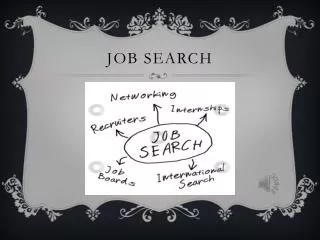
Ways to Developing Job Leads • Networking • Professional Organizations • College Career/Alumni Officers • Cold Contact/Direct Mail • Job/Career Fairs • Online Job Site/Job Board • Corporate Career Center • Recruit/Headhunter • Want Ads • Pounding the Pavement/Hitting the Streets
Networking • The art of building alliances • You are networking when you.. • volunteer for a local park "clean-up" day • visit with other members of your social clubs or religious groups • talk to your neighbors • strike up a conversation with someone else waiting at the veterinarian's office • talk to sales persons who are visiting your office
Networking • Chat Rooms and Web Forums • Social Networking Websites • Facebook • My Space • Mailing Lists
Professional/Trade Organizations • Every career field has at least one • Offer some sort of job posting /resume exchange program • One way you can find a organization • General Professional Organizations and Associations
College Career/Alumni Offices • Use Alumni in your field who would be willing to help you advance your career. • Contact the professionals from your alma mater's career services and/or alumni office
Cold Contact/Direct Mail • A lost art of job-hunting • Involves the job-hunter compiling a list of potential employers. • Including business and trade periodicals, company directories, even the phone book • Collect key research on each company • Lead managers • HR managers • Mail out (either via postal mail or email) a specifically-tailored cover letter and resume to each employer. • Target a direct-mail campaign; mass mailings don't work.
Job/Career Fairs • Companies send employees to these fairs • Meet and recruit top prospects. • Your goal • Prepare beforehand and identify the key employers in attendance • Develop a strategy for breaking through the clutter of other job-seekers.
Online Job Sites/Job Boards • The trend in job-hunting, at least from the job-seeker's perspective. • Should just be one small source of your job leads -- not your only source. • Three basic categories of job sites are available to job-seekers. • Big “general” job sites • many different career fields from numerous employers. • Industry-specific niche job sites • Job postings for jobs within a specific industry. • Geographic-specific job sites • Job openings specific to a certain region of the U.S. or other parts of the world.
Corporate Career Centers • One of the fastest growing sources of job leads • Often includes: • job openings • guidelines for submitting job-search materials • a wealth of information about the company • such as corporate culture, career paths, benefits, and more
Recruiters/Headhunters • Professionals who are employed by companies to screen and select the most qualified candidates for positions the company has open. • Avoid any employment agency where the applicant must pay the fee. • Work for the employer, not for you • Must have the qualities their clients are looking for
Want Ads • At one time, the main source of job leads for job-seekers. • However, as more companies now post job openings on their corporate sites and/or with online job sites • The importance of want ads has declined. • Can be helpful to those seeking entry-level positions.
Pounding the Pavement/Hitting the Streets • The oldest method of job-hunting and developing job leads • Entry-level positions and blue-collar jobs, • A specific geographic area • Going door-to-door and submitting job applicationsto employers. • Useful if you are relocating • Can make a trip prior to moving and spend that entire time submitting applications and meeting with prospective employers.
References • 10 Ways to Develop Job Leads: http://www.quintcareers.com/developing_job_leads.html
Job Search Video • http://www.aptv.org/Videoroom/viewprogram.asp?FileID=289