Download

1 / 10
100 likes | 237 Vues
During World War II, life on the Homefront was shaped by key factors including race relations, rationing and conservation efforts, the evolving roles of women, and economic challenges. The iconic "We Can Do It!" poster symbolizes the changing perceptions of women's capabilities, encouraging them to take on factory jobs and serve in the military. Women became integral to the labor force, filling positions left vacant by men who went to war and joining organizations such as WAVES and WAAC. This period marked a pivotal shift in gender roles and societal expectations.

E N D
Introduction 1. RACE RELATIONS & INTERNMENT CAMPS What were the four main topics about life during WWII on the Homefront? 2. RATIONING & CONSERVATION 3. WOMEN’S ROLES 4. ECONOMICS
Primary Source Women’s Roles are Changing What do you see? What do you know? What questions do you have? J Howard Hiller: “We Can Do It” also known as “Rosie the Riveter” Created – War Productions Board:1942
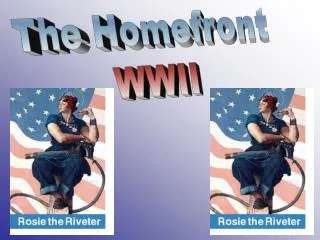
Primary Source Women’s Roles are Changing What do you see? What do you know? What questions do you have? Norman Rockwell's Saturday Evening Post cover featuring Rosie the Riveter
Who is the audience? What was the changing role of women? Which poster was used to persuade women to work in factories? Why? Compare/Contrast
#2: Women’s Roles • In the past, women really not played a role in war at all. • WWII played a part in advancing the role of women both at work and in the military • Women got involved in mainly 3 ways • Factory Jobs left by men • Military: WAVES (NAVY) WAAC (ARMY) • Nursing: dangerous jobs! Over 200 died
War on the Homefront "Rosie the Riveter"