THE HOMEFRONT
During World War II, women played a crucial part in supporting the war effort by stepping into roles traditionally held by men. With many men enlisted, women took on factory jobs, joined military groups like WAVES and WAACS, and served as nurses, risking their lives on the battlefield. Rationing, war bonds, and legislative measures like Executive Order 9066 showcased the economic and social challenges faced at home, including the internment of Japanese Americans. Together, these elements shaped the remarkable contributions of women and minorities, highlighting the fight for equality both in the military and on the home front.

THE HOMEFRONT
E N D
Presentation Transcript
Ways Americans helped win the War… Economic Resources Military Resources Human Resources
Women in the War • In the past, women really did not played a role in war at all. • WWII played a part in advancing the role of women both at work and in the military • Women got involved in mainly 3 ways • Factory Jobs left by men • WAVES and WAACS • Nursing
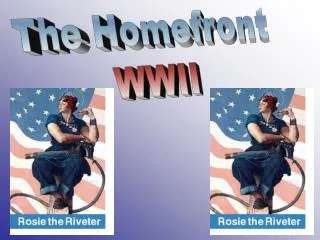
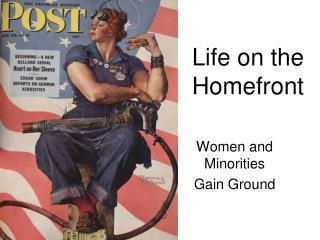
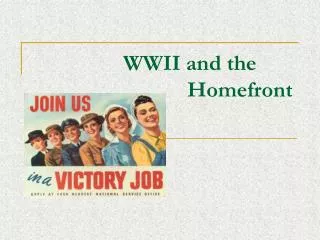
Rosie the Riveter • Served as the WWII image of women • She was someone who could help fight the battle at home • Not the typical “helpless” women
More on Women • Factory Jobs: With so many jobs left by men on that joined the military, women had to take them over. So they held much higher level jobs than before. • In WWII, the WAVES (Navy) and WAAC (Army) allowed women the first chance to serve the US through the military officially. They usually served in non-combat roles. • Women joined the battlefield as nurses. This was dangerous; 200 nurses died in the war.
Economic Resources Rationing was used to maintain a supply of essential products for the war effort. E.g. gasoline, metals, plastics, heating oil, etc… War Bonds and an Income tax were used to finance the War Businesses were changes for wartime production E.g. Car manufacturing = Tank manufacturing
Military Resources The Draft was used to provide Military support Human Resources Women and Minorities = Factory workers
African Americans Migrated to cities to find jobs in war plants Victory in War Equality at Home
Japanese Internment Camps West Coast
Japanese Internment Camps Why did we pick on the Japanese? What did we think they were doing?
Legislation made it Legal • Japanese Internment: Forced migration of over 100,000 Japanese Americans to camps in the southwest during WWII • Executive Order #9066: The bill by the government to force the Japanese onto camps • Why did this happen: Because of fear that Japanese Americans might have go against the United States and help Japan
American Propaganda Censorship of reporting the war Public Morale Ad Campaigns Entertainment Industry