Evidence of a Superfluid Core in Cassiopeia A Neutron Star
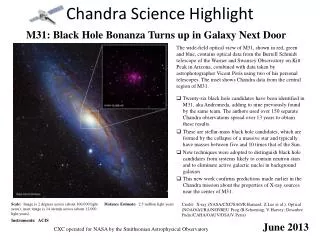
Chandra observations of the neutron star in the Cassiopeia A supernova remnant have shown a notable 4% decline in the star’s surface temperature, approximately 2 MK, over a decade. This striking cooling of the neutron star, which is around 330 years old, suggests the formation of a superfluid core in its central regions, where the temperature reaches roughly 700 MK. The rapid temperature decrease is anticipated to continue for several more decades, providing insights into the behavior of matter under extreme conditions.

Evidence of a Superfluid Core in Cassiopeia A Neutron Star
E N D
Presentation Transcript
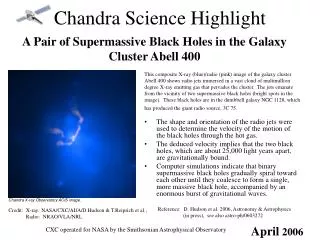
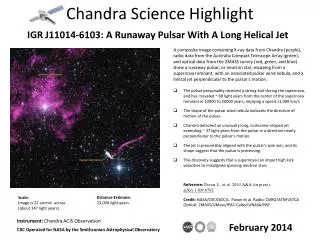
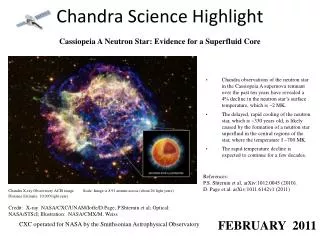
Chandra Science Highlight Cassiopeia A Neutron Star: Evidence for a Superfluid Core • Chandra observations of the neutron star in the Cassiopeia A supernova remnant over the past ten years have revealed a 4% decline in the neutron star’s surface temperature, which is ~2 MK. • The delayed, rapid cooling of the neutron star, which is ~330 years old, is likely caused by the formation of a neutron star superfluid in the central regions of the star, where the temperature I ~700 MK. • The rapid temperature decline is expected to continue for a few decades. References: P.S. Shternin et al, arXiv:1012.0045 (2010). D. Page et al. arXiv:1011.6142v1 (2011) Chandra X-ray Observatory ACIS image Scale: Image is 8.91 arcmin across (about 26 light years) Distance Estimate: 10,000 light years. Credit: X-ray NASA/CXC/UNAM/Ioffe/D.Page, P.Shternin et al; Optical: NASA/STScI; Illustration: NASA/CMX/M. Weiss FEBRUARY 2011 CXC operated for NASA by the Smithsonian Astrophysical Observatory