Chandra Reveals Galactic Chimneys in NGC 2841: Hot Gas Outflows Unveiled
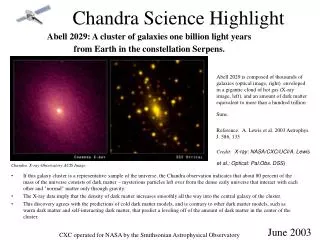
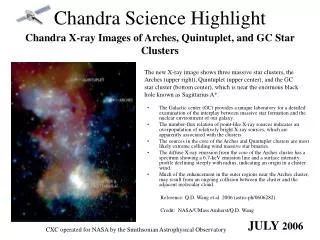
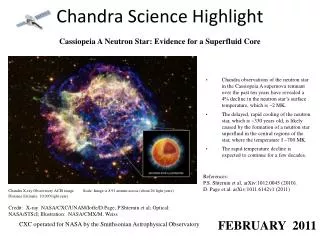
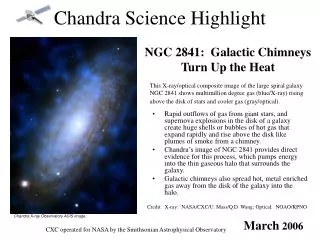
Chandra's latest image of NGC 2841 showcases stunning evidence of rapid gas outflows from giant stars and supernova explosions. These outflows create massive shells of hot gas that rise above the galaxy's disk, resembling plumes of smoke from chimneys. This process energizes the surrounding thin gaseous halo and disperses hot, metal-enriched gas away from the galaxy's disk. The composite image illustrates multimillion-degree gas in blue (X-ray) and cooler gas in gray (optical), revealing intricate dynamics shaping this large spiral galaxy.

Chandra Reveals Galactic Chimneys in NGC 2841: Hot Gas Outflows Unveiled
E N D
Presentation Transcript
Chandra Science Highlight NGC 2841: Galactic Chimneys Turn Up the Heat • Rapid outflows of gas from giant stars, and supernova explosions in the disk of a galaxy create huge shells or bubbles of hot gas that expand rapidly and rise above the disk like plumes of smoke from a chimney. • Chandra’s image of NGC 2841 provides direct evidence for this process, which pumps energy into the thin gaseous halo that surrounds the galaxy. • Galactic chimneys also spread hot, metal enriched gas away from the disk of the galaxy into the halo. This X-ray/optical composite image of the large spiral galaxy NGC 2841 shows multimillion degree gas (blue/X-ray) rising above the disk of stars and cooler gas (gray/optical). Credit: X-ray: NASA/CXC/U. Mass/Q.D. Wang; Optical: NOAO/KPNO Chandra X-ray Observatory ACIS image. March 2006 CXC operated for NASA by the Smithsonian Astrophysical Observatory