Expansion Joints Explained
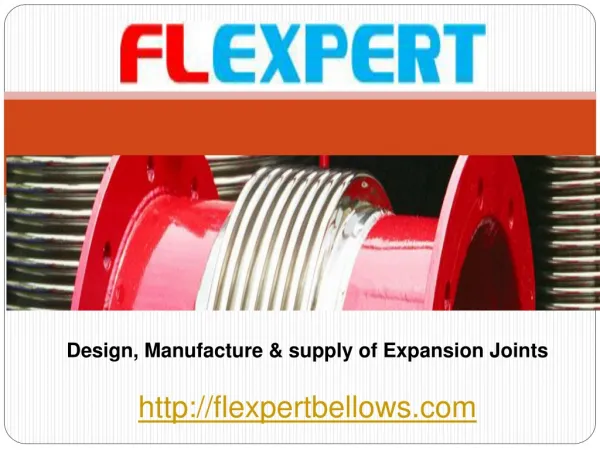
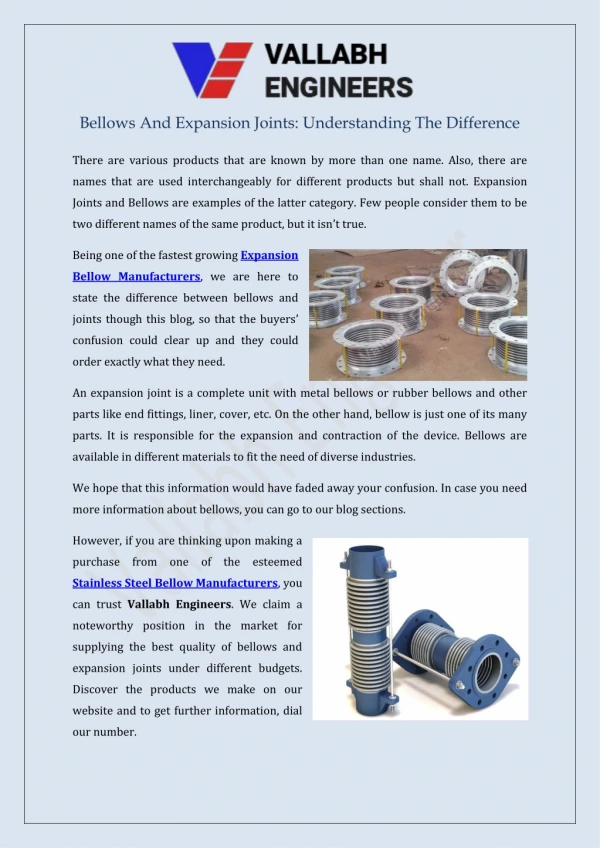
Expansion joints are flexible mechanical components designed to absorb movement caused by thermal expansion, pressure changes, vibration, and structural shifting. They are widely used in piping systems, ductwork, and exhaust lines to prevent stress buildup. Without expansion joints, rigid pipelines can crack, leak, or suffer serious equipment damage due to excessive strain.


Expansion Joints Explained
E N D
Presentation Transcript
EXPANSION JOINTS EXPLAINED Types, Production Process & Key Advantages Flexibel Expension Joints
Modern piping and ducting systems face changes in pressure, vibration, other operating Because of this, they can’t stay perfectly still or keep the same shape. constant temperature, and forces. These systems expand, contract, and shift as conditions change. If you don’t control that movement, it can create excessive stress, cause leaks, lead to misalignment, and shorten the system’s life. That’s why expansion joints are essential. Expansion joints allow pipes and ducts to move while absorbing vibration. As temperatures rise, the fluid heats up and the pipe or duct expands. The expansion joint provides a flexible section that moves with this growth. When temperatures drop, the system contracts, and the expansion joint flexes to accommodate the change. This controlled movement helps protect connected equipment and supports reliable, long-term operation. This Blog Is Already Published on : Understanding Expansion Joints: Types, Manufacturing, and Benefits
INTRODUCTION TO EXPANSION JOINTS Expansion joints are flexible mechanical components designed to absorb movement caused by thermal expansion, mechanical vibration, pressure fluctuations, and structural settling. They are commonly used in piping systems, ductwork, and exhaust lines, where they help prevent stress buildup. Without expansion joints, rigid pipe systems can experience excessive strain, leading to cracks, leaks, and costly equipment damage. The primary function of expansion joints is to compensate for movement, but their benefits go beyond that. They also help reduce vibration, minimize noise, and decrease mechanical load on connected equipment such as motors, turbines, and blower systems. This makes them essential for both small installations and large-scale industrial operations, where maintaining stability, safety, and efficiency is critical Modern expansion joints are often custom-designed to suit specific operating conditions, including high pressure, extreme temperatures, and heavy vibration environments. With the right design and manufacturing approach, expansion joints deliver long-term reliability, improved system performance, and reduced maintenance costs, making them a vital component in any high-performance mechanical or industrial system. “A wide variety of industries such as power generation, oil and gas, marine, HVAC, chemical processing, and manufacturing require the utilization of expansion joints to ensure safe, efficient and reliable operation of the system over a long period of time.”
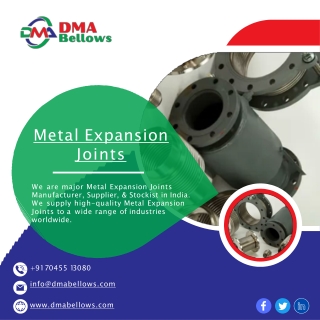
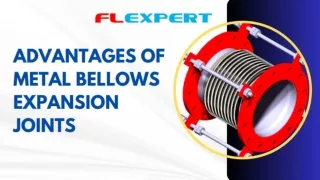
TYPES OF EXPANSION JOINTS There are several types of expansion joints, each designed to suit specific operating conditions, movement requirements, and media compatibility. 1. Metallic Expansion Joints Metallic Expansion Joints, Metallic Joints or Metal Expansion Joints consist of metallic thin-wall bellows usually constructed of, but not limited to, Stainless Steel and/or high-quality alloys. They facilitate axial, lateral, and angular movements with the necessary support for the structures surrounding them when installed. The Metallic Expansion Joint exhausts gas from the turbine in a Power Plant; feed water from the Boiler to the Turbine in a Refinery; feed gas to a Gas Turbine in a Petrochemical Facility; steam throughout a Steam Network; and marine industrial applications where Structural Integrity and Performance are of utmost importance. 2.Rubber Expansion Joints Rubber Expansion Joints are flexible connectors created from a material category known as elastomers, elastomeric (also known as rubber) are made from a family of materials such as EPDM, neoprene and nitrile. The various types of flexible connectors include rubber expansion bellows, rubber flexible joint and rubber bellow joint designs. The Rubber Expansion Joint is mainly used for isolating vibrations, absorbing small amounts of motion or for reducing noise. Rubber expansion joints are frequently utilised in HVAC systems, water treatment facilities, pump or motor connections, and general industrial piping applications. Rubber expansion joints manufacturers specifically design to increase their ability to withstand pressure.
3.Fabric Expansion Joints Fabric Expansion Joints are a type of flexible solution that can be used in many different applications where high temperatures and low pressures exist. Fabric joints can commonly be found in duct systems, exhaust lines, flue gas systems, and air handling units. A Fabric Expansion Joints Manufacturer creates types by layering multiple types of fabric together as well as using various types of insulation and coating materials to accommodate the thermal movement of the fabric due to thermal expansion/contraction, vibration, and exposure to corrosive gases. In addition, Fabric Expansion Joints are an excellent option in situations where metal joints cannot be used because of the weight limitations and/or concern with the corrosive nature of the gas being handled. 4.Metallic Hoses Metallic hoses are another term for Metal Hose or Metallic Hose, which are flexible metal assemblies designed to allow absorption of vibration and movement, while still maintaining flow integrity. Hoses are typically utilized in conjunction with expansion joints in applications that require flexibility and durability. Metallic hoses are frequently found in applications that are subject to high-pressure conditions, high temperatures and/or vibrations such as engine connections, fuel lines and industrial piping systems.
BENEFITS OF USING EXPANSION JOINTS Expansion joints provide a major benefit in that they take on the movement produced by the piping system and relieve it from all of the components of the piping system. This absorption of movement from thermal expansion and contraction prevents leaking from the piping systems and prevents damage to the piping systems. The expansion joints also suppress vibration and noise within the piping systems and increase the efficiency of their operation, protect sensitive equipment, and increase the durability of the piping system. The combination of the above characteristics allows for the extended service life of piping systems, lower maintenance costs, and increased operational safety.
INDUSTRIAL APPLICATIONS IN DIFFERENT INDUSTRIES Expansion joints have a variety of applications in many different industries. 1. Power plants utilize expansion joints to manage thermal expansion in steam and exhaust piping systems. 2.Oil & Gas and Petrochemical industries, expansion joints are used to absorb the fluctuations associated with pressure and temperature. 3.Marine applications are reliant upon expansion joints to help absorb the vibration and movement caused by wave action and engine operation. 4.HVAC systems utilize expansion joints to eliminate noise and accommodate ductwork movement. 5.The chemical and manufacturing industries also utilize expansion joints to save the manufacturing system from premature failure due to corrosion, as well as provide reliability for their systems.
EXPANSION JOINT COMPONENTS & DESIGN FEATURES Expansion joints have several parts that work together to control the following aspects: Movement (relative to the pipe), Pressure, and the Environment (flow through them). While the type of movement/bellows has been discussed previously in terms of the different styles (accordion type vs. ring- type), the remaining components are determined by how the expansion joint will function for each application (e.g., installation site, pressure rating, temperature, etc.). As long as each of these components has been designed according to these requirements, your custom expansion joint will operate within safe limits and last for many years without any problems. MATERIALS USED IN EXPANSION JOINT MANUFACTURING The type of material used to manufacture all of the different types of expansion joints will depend on what is required for a particular application. For the case of metallic expansion joints and metallic hoses, metals like stainless steel and various speciality alloys are used; for rubber expansion joints, internal elastomers are used; for fabric expansion joints, coated fabrics and insulation materials are used. The selection of the right material will enable the manufactured joints to be chemically compatible, able to withstand the temperature range required for the application, and durable enough for the application.
DIFFERENT MOVEMENT CAPABILITIES OF EXPANSION JOINTS Expansion joints are designed to flex in the axial direction, lateral direction, custom direction (angular) or a combination of these movements. The capability of these joints to accommodate movement is dependent on the type, design and the materials used to manufacture the joint. Most metal joints are constructed to withstand complex movements along with extremely high stress, whereas rubber joints and fabric joints provide the greatest flexibility with respect to compensating for vibration and misalignment. COMMON PROBLEMS & FAILURE CAUSES There are many reasons expansion joints fail, and the most frequent ones are due to selection errors, installation mistakes, excessive movement beyond the design limits (i.e., expansion / contraction), rust, and neglectful upkeep. A frequent example is using a different kind of expansion joint than is rated for your application in the door closing area, which can mean considerably shortening the life expectancy of that piece of equipment. Nevertheless, by routinely inspecting and/or periodically examining an expansion joint, and ensuring you have designed your system properly, you will most likely mitigate the chance of experiencing pre-mature failures in that expansion joint.
SELECTION GUIDE: CHOOSING THE RIGHT EXPANSION JOINT Choosing the correct type of expansion joint for your application requires an understanding of the operating conditions (i.e., pressure, temperature, movement and media). Most systems with high pressure and high temperature will use metal expansion joints. Systems that generate significant vibration will normally use rubber expansion joints or fabric expansion joints. Other factors to consider when selecting an expansion joint include installation space, maintenance access and industry standards. Partnering with an experienced manufacturer such as Flexibel will ensure that your expansion joint is designed and engineered for maximum performance over the long term.
CONCLUSION Piping and ducting systems can benefit from the use of expansion joints because they protect the systems from stress, vibration, and thermal movement. The use of metallic expansion joints, rubber expansion joints, and fabric expansion joints, as well as metallic hoses, can help increase the reliability, safety, and efficiency of systems. By learning about the various types and materials that are available for use, industries can design systems that will operate consistently and withstand adverse environmental conditions.
THANK YOU +971 529037473 flexibel.ae sales@flexibel.ae