Understanding Service Delivery Environments: Dynamics and Governance in Supply Chains
This analysis explores service delivery environments through the lens of solid-state vertical integration and hollow-state networked supply chains. Utilizing data from the International City/County Management Association (ICMA), it tracks changes in service delivery modes from 1992 to 2002, highlighting shifts in nonprofit, private firm, and government participation. Key participants include clients, suppliers, and regulators. The dynamics of competition, collaboration, and change are examined along with governance recommendations focused on principal-agent relationships and the importance of long-term partnerships to achieve desired outcomes.

Understanding Service Delivery Environments: Dynamics and Governance in Supply Chains
E N D
Presentation Transcript
Solid State: Vertically Integrated Supply Chain
Hollow State: Networked or Contracted Supply Chain
Nonprofit 2% Private Firm 6% Other Government 9% Joint 20% Direct 63% Percentage of Services Delivered by Mode 1992 (ICMA)
Nonprofit 2% Private Firm 7% Other Government 8% Joint 21% Direct 62% Percentage of Services Delivered by Mode 2002 (ICMA)
Service Delivery Environment: Participants & Stakeholders • Clients / Service Recipients • Competitors • Partners / Collaborators • Suppliers • Overseers / Regulators • Arrangers / Assemblers
Service Delivery Environment Dynamics • Competition • Collaboration and Networking • Change and Instability (e.g. client composition, regulation, legal requirements)
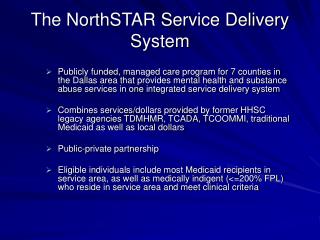
Network Governance Recommendations (Milward and Provan, 2000) • Clear principal-agent relationships • Principals should be producers as well as purchasers • Relationships should be long-term (e.g. long-term contracts) • Resources are often necessary, but insufficient to guarantee desired outcomes
Mission and Goals • Stakeholders • Dynamics (Threats and Opportunities)
Stakeholders • Players • Context Setters • Subjects • Crowd
Matching Governance Mechanisms with Stakeholders / Dynamics • Public vs. Private? • Clear Accountability Relationships? • Long Term Relationships? • Resources?