The Discovery of Cells: Understanding Cell Structure and Function
This chapter dives into the crucial discovery of cells, highlighting key scientists like Robert Hooke and Anton van Leeuwenhoek. It explains that all living organisms are made of cells, which are the smallest units capable of life processes. The chapter covers the Cell Theory, differences between eukaryotic and prokaryotic cells, and the vital role of cell structures like the plasma membrane, nucleus, mitochondria, and ribosomes in cellular function. It further explores cell diversity in shape and size, emphasizing the importance of the surface area-to-volume ratio for cellular efficiency.

The Discovery of Cells: Understanding Cell Structure and Function
E N D
Presentation Transcript
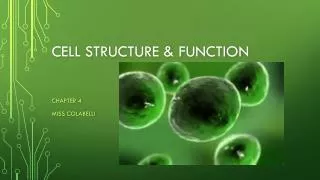
Cell Structure & Function Chapter 4 Miss Colabelli
The Discovery of Cells • All living things are made up of one or more cells • A cell is the smallest unit that can carry out life processes
The Discovery of Cells • Robert Hooke • English scientist that studied nature using a light microscope • Looked at thin slices of cork from bark on a cork oak tree • Noted there were empty pores throughout the specimen that resembled cells the monks would live in • Noticed other plant specimen had the same organization of boxes
The Discovery of Cells • Anton van Leeuwenhoek • First person to observe living cells • Made his own light microscope • Observed microorganisms such as algae and protists
The Discovery of Cells • The Cell Theory • A composition of understandings from different scientists that all cells must go by • All living things are composed of one or more cells • Cells are the basicunits of structure and function in an organism • Cells come only from the reproduction of pre-existing cells
Developments in Cell Biology • Timeline history of cells
The Cellular Basis of Life • Microscopes helped biologists clarify the definition of life • All cells carry out the same characteristics that categorize it as being alive • 7 characteristics of life
Cell Diversity • Cell Shape • Reflects the function and location of the cell
Cell Diversity • Cell Size • Cells are limited by the relationship of their outer surfacearea to its volume • As a cell grows, its volume increases much faster than the surface area • Important to know because nutrients and wastes need to move though the cell efficiently • A cell too large would take too long to diffuse these materials and it can harm the cell • Most cells are better off being smaller and keeping their surface area to volume ratio bigger
Plasma Membrane • Cell’s outer boundary • Covers the cell’s surface and acts as a barrier between inside and outside of the cell • Cytoplasm • Area within the cell that contains the fluid, cytoskeleton, and the organelles • Nucleus • Membrane-bound area of the cell that contains genetic information • Controls the function of the cell
Two Basic Types of Cells Eukaryote Contain a membrane-bound nucleus and organelles with membranes Organelles carry out functions for the cell Usually plant and animal cells Prokaryote • Organisms that lack a membrane-bound nucleus and membrane-bound organelles • General area of cell where genetic information is located is called the nucleoid • Usually bacteria and archaea
http://www.wiley.com/legacy/college/boyer/0470003790/animations/cell_structure/cell_structure.htmhttp://www.wiley.com/legacy/college/boyer/0470003790/animations/cell_structure/cell_structure.htm
Plasma Membrane • Membrane Lipids • Made of two layers of phospholipids (phospholipid bilayer) • Membrane Proteins • Specific proteins embedded in the lipid bilayer • These proteins help with transporting molecules across the membrane and act as receptors • Send messages to the rest of the cell
Inner life of the cell http://www.youtube.com/watch?v=B_zD3NxSsD8
Nucleus • Houses and protects the cell’s genetic information • Contains instructions for the structure and function of the organism • Before a cell divides, the DNA condenses to form chromosomes • Nuclear envelope • Double membrane that surrounds the nucleus • Made of two phospholipid bilayers • Contains pores (holes) called nuclear pores for RNA and other materials to enter and leave the nucleus • Nucleolus • Dense area in the nucleus where DNA is concentrated • Where ribosomes are produced
Mitochondria • Organelles that transfer energy from organic matter (foods) to ATP • ATP powers most of the cell’s chemical reactions • Highly active organelles • Two layer of membrane • Outer membrane holds cytosol • Inner membrane has folds called cristae where energy-harvesting chemical reactions take place http://www.youtube.com/watch?v=Ju0HxI5GWTo
Mitochondria • Mitochondrial DNA • Have their own DNA and reproduce on their own • Scientists think mitochondria originated from prokaryotic cells and were incorporated into eukaryotic cells • Called the endosymbiotictheory http://www.sumanasinc.com/webcontent/animations/content/organelles.html
Ribosomes • Small, spherical organelles that are responsible for synthesizing proteins • Do not have a membrane • Made of protein and RNA molecules • Synthesized in the nucleus • Made of two subunits • Some are free in the cytoplasm and some are attached to another organelle called the endoplasmic reticulum
Endoplasmic Reticulum (ER) • System of membranous tubes • Functions as a highway for molecules to move throughout the cell • Two types of ER • Rough ER • Smooth ER
Rough Endoplasmic Reticulum • System of interconnected tubes covered with ribosomes • Ribosomes make it look “rough” • Area where some proteins are made
Smooth Endoplasmic Reticulum • Lacks ribosomes and looks smooth • Builds lipids like cholesterol and hormones for the body • Helps detoxify drugs and poisons • Liver cells contain a high amount or smooth ER cells • Long-term drug and alcohol users also increase their smooth ER organelles in their cells
Golgi Apparatus • System of flattened sacs • Sacs near the nucleus receive vesicles from the ER that contain newly made proteins and lipids • Vesicles travels through the Golgi • Golgi apparatus “stamps” the vesicles to where they need to travel to in the cell • Like address labels
Vesicles • Small sphere like sacs that are surrounded by a single membrane • Lysosomes • Vesicles that bud from the Golgi and contain enzymes that break down large molecules • Also help break down cells when it is time for the cell to die • Peroxisomes • Similar to lysosomes except contain different enzymes • Neutralize radicals and detoxify alcohol and drugs • Produce hydrogen peroxide as a product in their chemical reactions http://www.stolaf.edu/people/giannini/flashanimat/cellstructures/microtubuletransport.swf
Cytoskeleton • Network of thin tubes and filaments that crisscross the cytosol • Give the cell its shape • Like poles in a tent • Internal tracks where items in the cell move around the cell • Three different types of tubes found in the cytoskeleton • Microtubules • Microfilaments • Intermediate filaments
Microtubules • Hollow tubes made of protein called tubulin • Radiate outward from the center called centrosome near the nucleus • Hold organelles in place • Maintain cell shape • Act as tracks to guide organelles and molecules as they move within the cell
Microfilaments • Smaller than microtubules • Long threads of bead like protein called actin • Contribute to cell movement • Crawling white blood cells • Muscle contraction
Intermediate Filaments • Rods that anchor the nucleus and organelles in place • Maintain internal shape of the nucleus • Make up most of the hair shaft
Cilia and Flagella • Hair like structures that extend from the surface of the cell • Assist in movement • Cilia • Short and present in large numbers • Flagella • Long extensions of the cell, usually one that helps with the cell moving
Centrioles • Two short cylinders of microtubules at right angles to each other • Near the nuclear envelope • Occur only in animal cells • Organize microtubules of cytoskeleton during cell division
Plant Cells • Most of the organelles and parts of the cell are in all eukaryotic cells • Plants have three additional structures • Cell wall • Central vacuole • Plastids
Cell Wall • Rigid layer that lies outside the cell’s plasma membrane • This cell wall is composed of the polysaccharide cellulose • Primary cell wall • On top of the plasma membrane • Can grow in one direction • Secondary cell wall • Between the plasma membrane and the primary cell wall • Does not grow
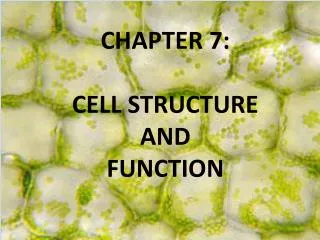
Central Vacuole • Reservoir that stores large amounts of water, enzymes, wastes, and other materials • Large, fluid filled organelle • May take up 90% of the cell’s volume • When there is a lot of water the vacuole fills up • When there is little water the vacuole deflates
Plastids • Double membrane organelles and contain their own DNA • Chloroplasts • Use light energy and water to make food and oxygen • Used in photosynthesis • Chromoplasts • Contain colorful pigment • May take part in photosynthesis • Give the plant its color
Comparing cells Eukaryote Have a nucleus Membrane-bound organelles Plant and animal cells Prokaryote • Lack a nucleus • No membrane-bound organelles • Region called nucleoid • Bacteria and archaea
Comparing Cells Animal Cell No cell wall No vacuole Contain centrioles Plant cell • Cell wall • Large central vacuole • Contain plastids