ACIDS AND BASES
The pH scale is essential for measuring how acidic or basic a liquid is, ranging from approximately 0 to 14. Acids, typically found below pH 7, release hydrogen ions when dissolved in water and are known for their sour taste and corrosive nature. Bases, with pH values above 7, release hydroxide ions, taste bitter, and are often slippery, commonly used in cleaning solutions. Neutral substances have a pH of 7. Common indicators like litmus paper and cabbage juice help identify pH levels, revealing their interactive nature with acid and base substances.

ACIDS AND BASES
E N D
Presentation Transcript
THE PH SCALE • IS USED TO MEASURE HOW ACIDIC OR BASIC A LIQUID IS. • THE SCALE RANGES FROM CLOSE TO 0 – 14 • ACIDS RANGE FROM 0 - JUST BELOW 7 • BASES RANGE FROM JUST ABOVE 7 – 14
ACIDS • RELEASE HYDROGEN (+) IONS INTO WATER • TASTES SOUR • ARE CORROSIVE • CONDUCTS ELECTRICITY
BASES • RELEASE HYDROXIDE (OH-) IONS WHEN DISSOLVED INTO WATER • TASTE BITTER • ARE CORROSIVE • USED IN CLEANING SOLUTIONS (FEELS SLIPPERY) • ALKALI IS ALSO A WORD FOR BASE
NEUTRAL • IS NOT AN ACID OR A BASE. • HAS A PH OF 7 • MOST LIQUIDS HAVE A PH OF CLOSE TO 7
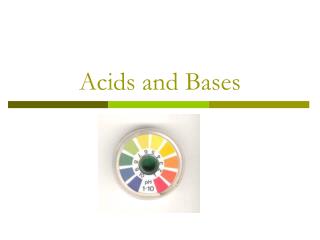
INDICATORS • USED TO FIND THE PH LEVEL • REACTS WITH ACID AND BASIC SUBSTANCES • PRODUCE COLORS THAT IDENTIFY THE PH • CABBAGE JUICE • LITMUS PAPER • UNIVERSAL INDICATOR httpwww.scientificsonline.comph-test-strips.html www.erowid.orgph-cabbage.jpg www.funsci.com/fun3_en/acids