
Taiga
E N D
Presentation Transcript
Taiga Biomes by TYLER MUSKOPF all photos and facts from www.mbgnet.net
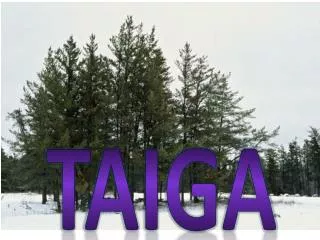
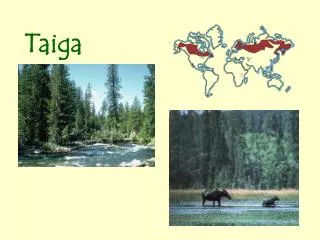
Where is the Taiga Biome found? • It is the largest biome. • It is near the top of the world. • It is primarily a coniferous forest (evergreen trees with needles) like the temperate rainforest. • Many coniferous trees (evergreens with needles) grow in the Taiga. • It has fewer animal species than the tropical or temperate deciduous forests.
Taiga AnimalsThe Hawk Owl • It hunts by day • It’s tail is longer than others. • It feeds on mice, squirrels and more.
Taiga AnimalsThe Ermine • At the beginning of winter it loses its dark fur and grows a pure white coat, only the black tail tip remaining. • The Ermine is a highly skilled predator. • It kills its prey by giving a big bite
Taiga Trees • Taiga trees tend to be conifers. • Coniferous trees have pine cones • It can take up to 2 years to produce a mature seed. • The Taiga is prone to wildfires. • Many trees have adapted to this by growing thick bark, which can protect a tree from a mild fire.
Conifers Tree have Needles • Conifers have needles instead of wide leaves • The needles are thickly covered in wax. • The Taiga has lots of snow that’s why the needles have wax on them. • The other leaves will break apart.
Taiga Climate • Average temperature is below freezing for six months of the year. • Total yearly precipitation in the Taiga is 12 - 33 inches.
Biome Fun Facts • Because of the tilt of the earth on its axis, in the Taiga you'll find long nightsin the winter and long days in the summer. • Cold winters have some snowfall, most of the precipitation comes during the warm, humid summer months.
Taiga Summary • Winter nights are long and summer days are long • Cold winters get some snowfall • Most precipitation comes in warm humid summer months • Regular tree leaves will break with heavy snow