Download

1 / 19
190 likes | 325 Vues
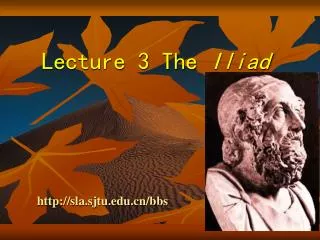
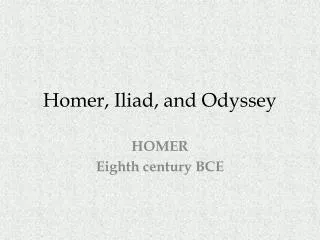
This comprehensive overview of Homer's "The Iliad" delves into essential characters like Achilles, Agamemnon, and Priam, alongside significant themes such as fate vs. free will, love and hate, pride, and the pursuit of glory. The notes highlight the epic's blend of myth and history, reflecting the cultural dynamics of Ancient Greece, including the roles of women and the concept of masculinity. Additional insights on military training and education in Athens and Sparta are included, emphasizing how these practices shaped society during the time.

E N D
Important Names • Acheans • Achilles • Myrmidon • Patroclous • Helen of Troy • Menelaus • Agamemnon • Priam • Briseus • Chryseis • Nestor • Hades • Dionysus/Apollo • Zeus • Hephaestus • Odysseus
Notes • Ilium • 15,693 lines • Epic Poem • Homer • Influence • War… or love?
Myths NOT in story: • Achilles heel & river styx • Trojan Horse Attack • Helen’s suitors • Agamemnon Sacrifice
Truths • City of Troy • Homer reports history • Part myth, part history • Heroes were REAL to the Greeks • Achilles/Patroclous burial site • Ancestry
Epic Poem • Extraordinary hero charged with quest • Quest has obstacles • Supernatural element • Hero resurrects himself at low point • Epic: Long, narrative poem detailing the adventure or journey of a hero.
Epic Hero • Male • Unusual birth • Event leads to quest • Supernatural help • Proves himself • Rewarded upon death
Epic Conventions • Invocation • Question • Simile • Epithet • Confrontation • In media res • Combat
Epic Journey • Journey is key element in epic cycle • 1. questor • 2. place to go • 3. reason to go • 4. challenges/trials • 5. real reason
Overall “Themes” • Fate vs free will • Love & hate • Pride • Pursuit of glory • Glory vs. horror • Grief & revenge • Male-male bonds
Homosexuality • Paiderastia • “boy love” • Erastes/Eromenos • Masculinity • Culture of Ancient Greece
Women in Ancient Greece • Patriarchy • Married young to older men • There to bear children • Lived with husband’s mother • Confined to home • Sparta: women were more equal • Athens: women were locked away
Sex in Ancient Greece • Sexual orientation & Gender vs. Social Status • Active vs. Passive • Masculine vs. Feminine • Training of young men included homosexual bonding • Pederastic roles in “Iliad”
Marriage • Ceremony • Age • Outlawing of homosexuality • Mutual Consent • Changes in laws and trends • Differs between cultures still today
Military Training in Ancient Greece • Athens: Goal to produce citizens trained in arts and to prepare for both peace and war. • Homeschooled until age 6 • 6-14 attend school; read aloud and memorize • Used tablets and rulers • Learned Homer & the Lyre • Other subjects discretion of teacher (always male) • High school for 4 years • Went to military school for 2 years (18-20); then graduated • Girls didn’t attend school but could study at home
Contd. • Sparta: Purpose of education was to produce a disciplined marching army! • Discipline, self-denial, simplicity • Required to have “perfect” bodies. Babies that didn’t pass the test were killed are sent to be a slave (helot). • Boys sent off to military school at age 6 or 7. Slept in barracks with other boys. • Taught to read and write, but warfare was most important. • Training was brutal; they marched without shoes, went without food, etc.
Sparta, contd. • At age 18-20, boys had to pass a test (fitness, leadership, skill); if they didn’t pass, they’d became perioikas (middle class with no citizenship). • If pass, they became a full citizen and Spartan soldier. • Not allowed to touch money. • Lived in barracks with their “brotherhood” (even if married). • Could “retire” at age 60 and go to live with their families. • Girls were also educated and sent to live with their “sisterhood”. If she passed a physical fitness test at 18, she’d be assigned a husband. If not, she’d become perioikas. • Spartan women had freedom to leave the home.
War, contd. • While the varying city-states of Greece were often fighting each other, they’d often form LEAGUES– alliances. • There were many wars, but the 4 main ones were: • Trojan War, Persian, Peloponnesian, and Alexander’s Campaigns.
Text Discussion • We will discuss the text in class. These notes will only be in lecture/discussion form and will not appear online.







![226 Notes - Locke [ 1 ]](https://cdn1.slideserve.com/1715077/226-notes-locke-1-dt.jpg)