SlideServe
Menu
Préférences
© SlideServe · v2026

The Formation of NAWSA: Uniting Women for Suffrage in America

garson avatar
16 diapositives · 300 Views · Aug 31, 2014

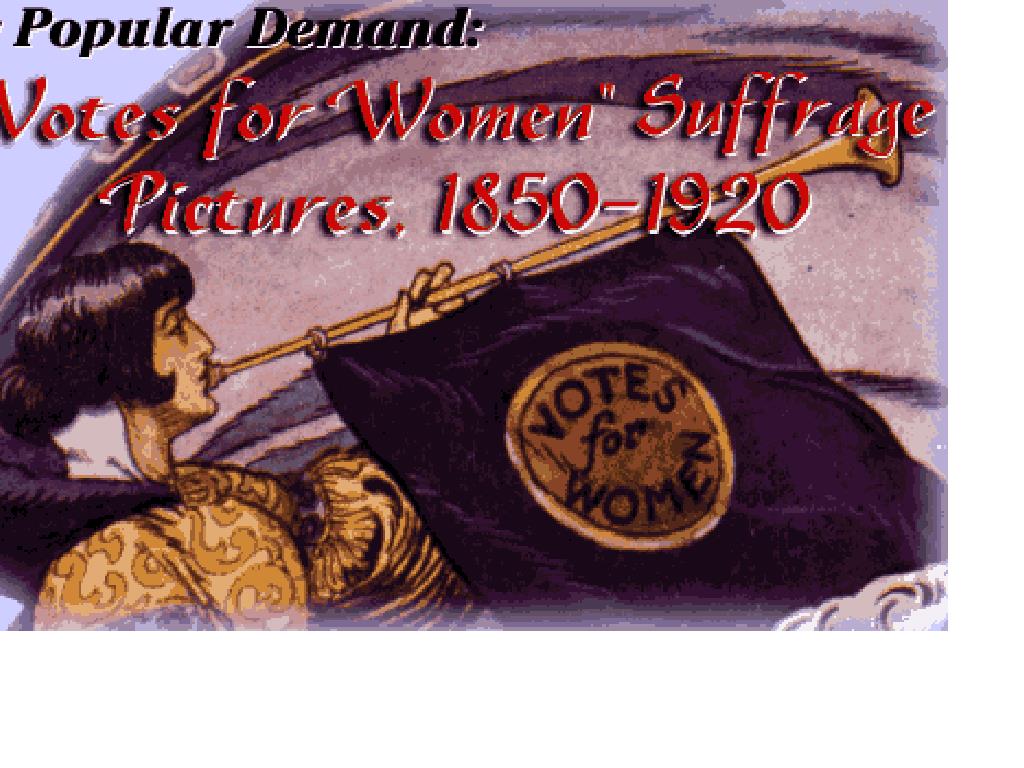
Formed in 1890, the National American Woman Suffrage Association (NAWSA) emerged from the merger of two factions: the National Woman Suffrage Association (NWSA), led by Elizabeth Cady Stanton and Susan B. Anthony, and the American Woman Suffrage Association (AWSA), led by Lucy Stone and Henry Blackwell. NWSA pursued a federal amendment for women's voting rights, while AWSA advocated for state-level campaigns. NAWSA synthesized these strategies, successfully leading to the passage of the Nineteenth Amendment in 1920, guided by Carrie Chapman Catt's leadership.
The Formation of NAWSA: Uniting Women for Suffrage in America - slide 1
01 / 16The Formation of NAWSA: Uniting Women for Suffrage in America
1 / 17

Télécharger la présentation

The Formation of NAWSA: Uniting Women for Suffrage in America
Une image / un lien ci-dessous est fourni (tel quel) pour télécharger la présentation

Politique de téléchargement : le contenu du site vous est fourni TEL QUEL pour votre information et votre usage personnel ; il ne peut être vendu, concédé sous licence ni partagé sur d’autres sites sans l’accord de son auteur.Le contenu vous est fourni TEL QUEL, pour votre information et votre usage personnel uniquement. Téléchargez la présentation en cliquant sur ce lien. Lors du téléchargement, si vous ne parvenez pas à télécharger une présentation, l’éditeur a peut-être supprimé le fichier de son serveur.Pendant le téléchargement, si vous ne parvenez pas à obtenir une présentation, le fichier a peut-être été supprimé par l’éditeur.

F I N

Plus de contenu associé

Transcription de la présentation

  1. Formed in 1890, NAWSA was the result of a merger between two rival factions--the National Woman Suffrage Association (NWSA) led by Elizabeth Cady Stanton and Susan B. Anthony, and the American Woman Suffrage Association (AWSA), led by Lucy Stone and Henry Blackwell, and Julia Ward Howe. These opposing groups were organized in the late 1860s, partly as the result of a disagreement over strategy. NWSA favored women's enfranchisement through a federal constitutional amendment, while AWSA believed success could be more easily achieved through state-by-state campaigns. NAWSA combined both of these techniques, securing the passage of the Nineteenth Amendment in 1920 through a series of well-orchestrated state campaigns under the dynamic direction of Carrie Chapman Catt.

  2. Head of suffrage parade, Washington, D.C.. March 3, 1913

  3. Suffrage parade, New York City, May 6, 1912

  4. Inez Boissevain, wearing white cape, seated on white horse at the suffrage parade in Washington, D.C., 1913. Inez died of an anemia-related disease and became a martyr for the cause.

  5. Carrie Chapman Catt, 1850-1920 Head of the NAWSA

  6. Alice Paul, 1885-1970 Head of National Women’s Party (CUWS)

  7. Lucy Burns 1879-1966 Worked closely with Alice Paul as leaders of CUWS

  8. 1909

  9. WA Post, 1896

  10. CUWS Mass Meeting Poster