Overview of the Human Digestive System Functions and Components
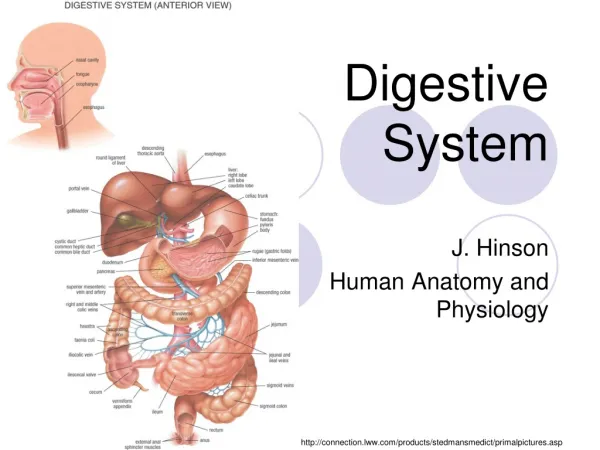
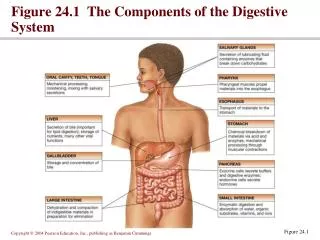
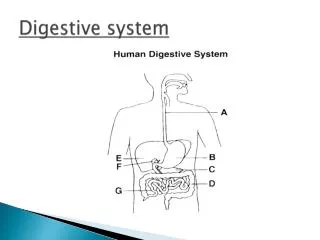
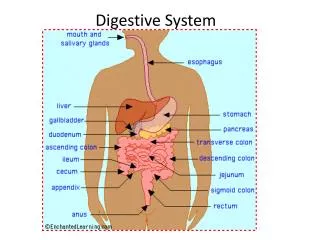
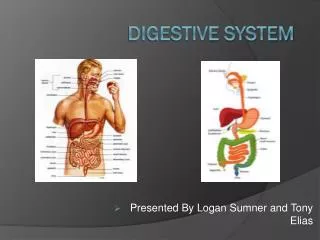
The human digestive system is a complex network that involves various organs and functions crucial for the breakdown and absorption of nutrients. Starting from the mouth, where ingestion occurs, food is mechanically and chemically processed through structures such as the esophagus, stomach, and small intestine. Each component has unique roles, including the production of saliva by salivary glands, bile by the liver, and digestive juices by the pancreas. The digestive process continues through the large intestine, where water absorption and defecation occur, aided by beneficial bacteria that synthesize essential vitamins.

Overview of the Human Digestive System Functions and Components
E N D
Presentation Transcript
Digestive system components Primary functions and important details
Mouth • Ingestion • Hard palate: works with tongue for swallowing • Soft palate: uvula closes the nasopharynx
Salivary Gland Functions • Creates salvia which: • Cleans the mouth • Dissovles some food chemicals • Moistens food • Produces amylase which breaks down starch
Salivary gland details • Saliva is 97% water. Enzymes, antibodies and proteins are also produced • Mumps is a viral disease that causes swelling
Tongue • Mechanical digestion and propulsion • Forms food into a bolus • Contains papillae with taste buds
Teeth • Mechanical digestion • 4 types: incisors, canines, premolars, molars • 3 parts: crown, neck, root • Cavities are caused by the most common bacterial infection fund in humans
Pharynx • Propulsion • Has three layers of skeletal muscle (no smooth)
Esophagus • Propulsion • Has layers of skeletal and smooth muscle
Stomach Functions • Mechanical digestion using 3 layers of muscle • Chemical digestion • Absorption: asprin, some prescription drugs, and alcohol • Temory storage of chyme
Stomach details • Gastric glands secrete: mucous, HCl acid, pepsin enzyme, gastrin hormone, serotonin and somatostatin hormone, and histamine. • Rennin is an enzyme only produced in childhood • Emetic center controls vomiting
Small Intestine Functions • Mechanical mixing of food with digestive juices • Chemical digestion • absorption
Small intestine details • 3parts: doudenum, jejunum, ileum • Villi and microvilli create the brush border for increasing surface area for absorption • Neutralizes acidic chyme
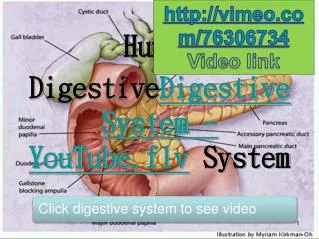
Liver • Creates bile • Composition of bile: fats, bile salts, pigment, cholesterol, phospholipids
Gall Bladder • Stores bladder • Gallstones can form to clog the bile duct
Pancreas • Creates pancreactic digestive juices • PDJ contains water, enzymes, bicarbonate
Large Intestine functions • Absorption of water • Propulsion • Defecation • Small role in chemical digestion
Large intestine details • 3 parts: ascending, transverse, descending • Bacterial living in the lg. intestine help break down indegestible carbohydrates such as cellulose • These bacterial flora also synthesize B and K vitamins