The Rise and Transformation of Societies from the First to the Third Wave Civilization
This overview explores the transition from the First Civilizations to the emergence of the Second Wave societies between 500 BCE and 500 CE, highlighting their characteristics, continuity, and eventual collapse. It examines how urban centers and state-based societies reshaped human organization while maintaining elements of earlier patterns such as kinship-based agriculture, chiefdoms, and social hierarchies. Despite significant changes like population growth and new communication networks, the core structures of power and social division persisted. The discussion continues into the Third Wave from 500 to 1500 CE, framing it within a broader historical context.
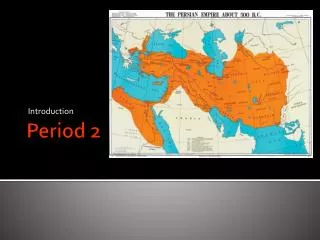

The Rise and Transformation of Societies from the First to the Third Wave Civilization
E N D
Presentation Transcript
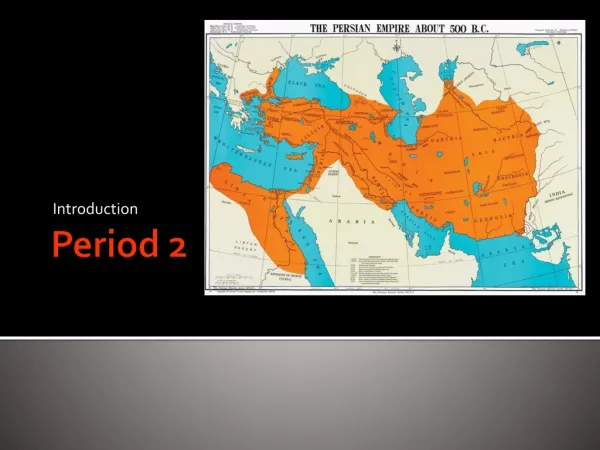
Introduction Period 2
Connecting Periods 1 & 2 • Even w/ their indiv. faults there was no turning back from the First Civ. • In the approx. 1000 years between 500 BCE & 500 CE new or enlarged urban centered and state based societies emerged to replace the First Civ. • This “second wave” will eventually collapse • “Third wave” will emerge 500 to 1500 CE
Strayer and Period 2 • It’s not always about empires • This section of the book will occas. point out cont. historical dev. of gathering and hunting peoples, agr. cultural societies based around kinship principles and village life, emerging chiefdoms, & pastoral peoples.
What changed? • Not much
What didn’t change? • Monarch cont. to rule • Men dominate women • Sharp divide b/w elite & everyone else • Practice of slavery • No technological or economic breakthrough
Zoom Lens • Significant changes did occur, but they didn’t result in major transformations (hence our earlier answer). • But if we look closely we can see some minor changes.
Some of these changes: • Population grew • Growing size of states or empires • Impt. innovations • The most impt. perhaps – philosophical and religious systems • Modest innovations increased human ability to manipulate environment • Emergence of much more elaborate, widespread and dense networks of communication and exchange that connected people • Long distance trade routes = transregional interaction = cultural diffusion
Name It • “classical era” • Tend to highlight the enduring traditions that cont. into modern times • Religion • Current country/civilization identities link to this era • Ch 4-6 focus on the Eurasian peoples • Ch 7 looks at Africa & Americas – do their histories during the classical era parallel Eurasian patterns or do they explore alternative possibilities?