Download
1 / 7
70 likes | 194 Vues
ATP, or adenosine triphosphate, is a vital energy carrier in cells, releasing energy when its phosphate bonds are hydrolyzed. Composed of three phosphate groups, one ribose, and one adenine, ATP undergoes hydrolysis to form ADP, generating approximately 7.3 kcal of energy per mole. This exergonic reaction enables cellular processes that require energy, while excess energy helps regenerate ATP from ADP and inorganic phosphate (Pi). Muscle cells can recycle their ATP pool in under a minute, utilizing and regenerating about 10 million ATP molecules per second.

E N D
ATP Cycle Anna, Nofal, Will
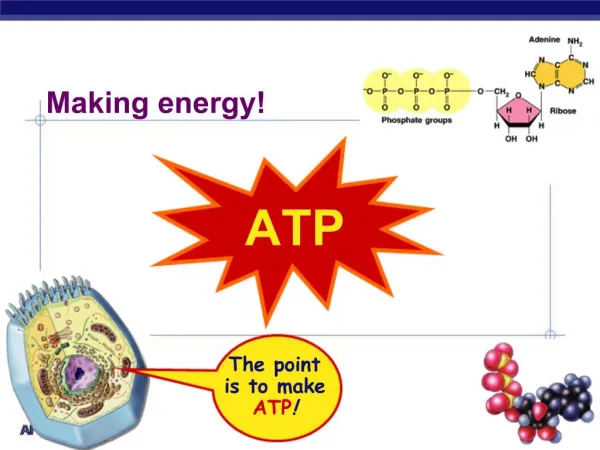
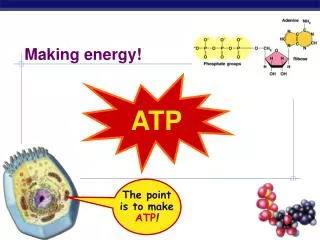
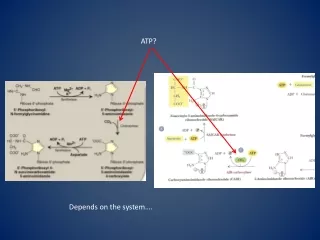
(Adenosine triphosphate) • An adenine-containing nucleoside triphosphate that releases free energy when its phosphate bonds are hydrolyzed • The phosphate bonds are all negatively charged so they are coiled and unstable • This energy is used to drive reactions in cells that require energy (endergonic) What is ATP?
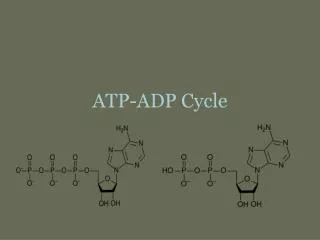
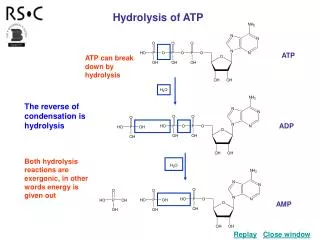
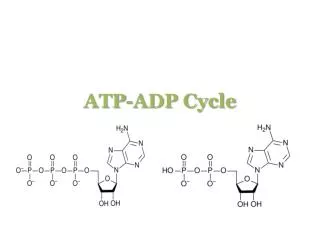
Molecular structure: three phosphate groups, one ribose group, and one adenine group
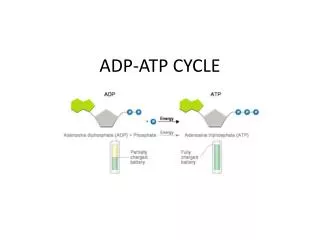
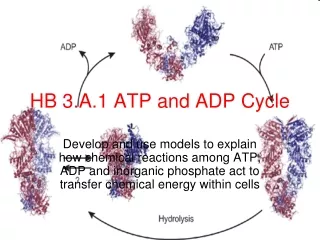
The ATP and water form a hydrolysis reaction • This hydrolysis reaction separates a phosphate tail creating ADP • This generates 7.3 kcal of energy per mole of ATP ATP Cycle
When ATP is separated into ADP, it releases energy. This is called an exergonic reaction • Some of this released energy is used to fuse ADP and a Pi together to make ATP again • This means the ATP cycle is continuous How is ATP used and regenerated?
A working muscle cell recycles its entire pool of ATP in less than a minute. This means that 10 million molecules of ATP are used up and regenerated every second for every cell. Fun fact