
Hormonal Signal Transduction and Nutrient Processing in Cells

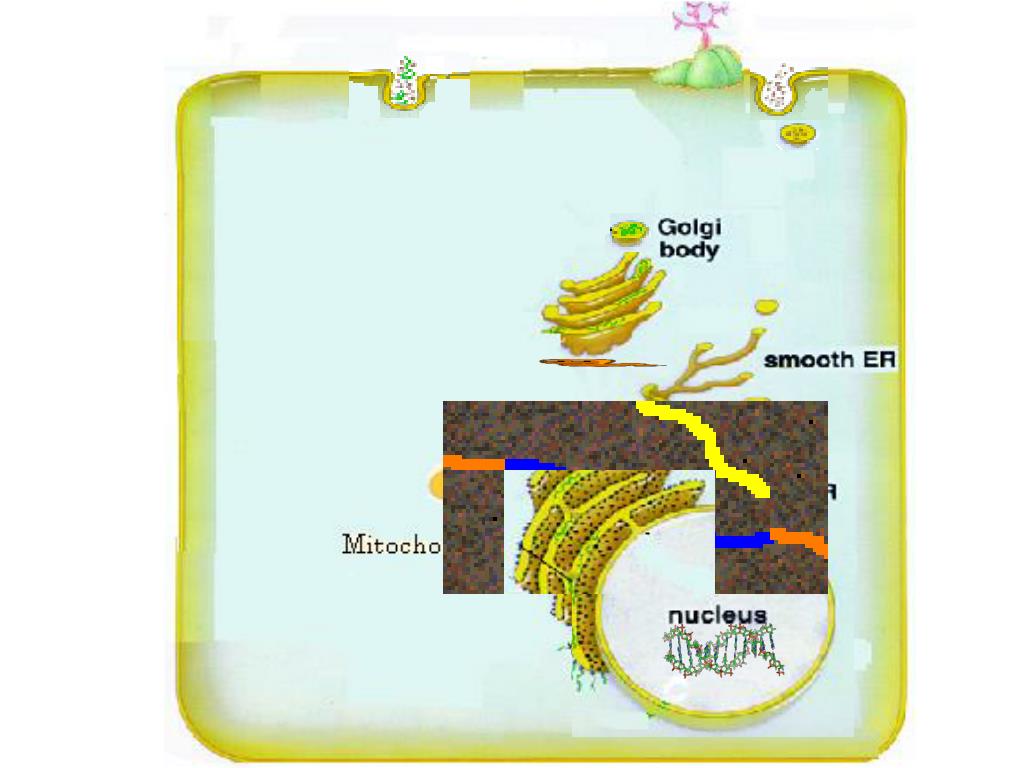
This process outlines how receptor proteins receive hormones, initiating a cascade that leads to protein synthesis and nutrient processing within the cell. The hormone binds to the receptor, triggering a series of steps where DNA is transcribed to RNA, which is then translated into proteins by ribosomes. These proteins are transported to the Golgi apparatus for maturation before being released. Additionally, it describes how food enters the cell through endocytosis, and how enzymes from lysosomes break down the food into sugars, which mitochondria use to produce ATP.
Télécharger la présentation 
Politique de téléchargement : le contenu du site vous est fourni TEL QUEL pour votre information et votre usage personnel ; il ne peut être vendu, concédé sous licence ni partagé sur d’autres sites sans l’accord de son auteur.Le contenu vous est fourni TEL QUEL, pour votre information et votre usage personnel uniquement. Téléchargez la présentation en cliquant sur ce lien. Lors du téléchargement, si vous ne parvenez pas à télécharger une présentation, l’éditeur a peut-être supprimé le fichier de son serveur.Pendant le téléchargement, si vous ne parvenez pas à obtenir une présentation, le fichier a peut-être été supprimé par l’éditeur.
F I N