
SlideServe
Menu
Préférences
© SlideServe · v2026

ATP

judd avatar
13 diapositives · 429 Views · Aug 08, 2014

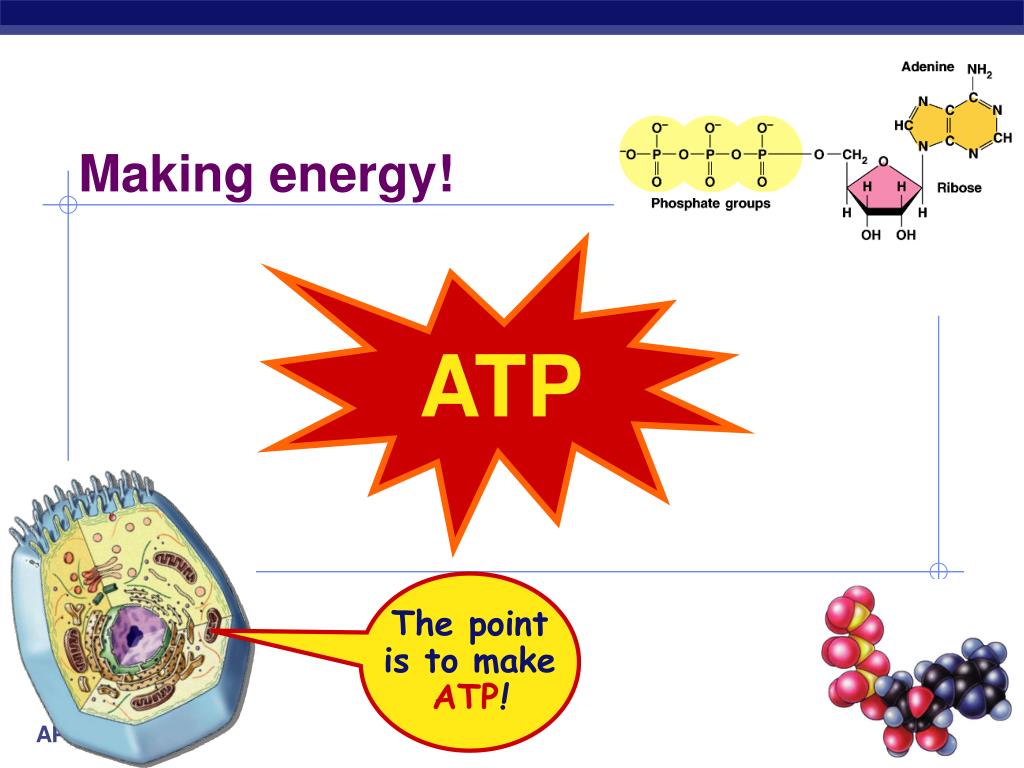
Making energy!. ATP. The point is to make ATP !. The energy needs of life. Organisms are endergonic systems What do we need energy for? synthesis building biomolecules reproduction movement active transport temperature regulation. Where do we get the energy from?.
ATP - slide 1
01 / 13ATP
1 / 17

Télécharger la présentation

ATP
Une image / un lien ci-dessous est fourni (tel quel) pour télécharger la présentation

Politique de téléchargement : le contenu du site vous est fourni TEL QUEL pour votre information et votre usage personnel ; il ne peut être vendu, concédé sous licence ni partagé sur d’autres sites sans l’accord de son auteur.Le contenu vous est fourni TEL QUEL, pour votre information et votre usage personnel uniquement. Téléchargez la présentation en cliquant sur ce lien. Lors du téléchargement, si vous ne parvenez pas à télécharger une présentation, l’éditeur a peut-être supprimé le fichier de son serveur.Pendant le téléchargement, si vous ne parvenez pas à obtenir une présentation, le fichier a peut-être été supprimé par l’éditeur.

F I N

Plus de contenu associé

Transcription de la présentation
  1. Making energy! ATP The pointis to makeATP!

  2. The energy needs of life • Organisms are endergonic systems • What do we need energy for? • synthesis • building biomolecules • reproduction • movement • active transport • temperature regulation

  3. Where do we get the energy from? • Work of life is done by energy coupling • use exergonic (catabolic) reactions to fuel endergonic (anabolic) reactions digestion energy + + synthesis energy + +

  4. Living economy • Fueling the body’s economy • eat high energy organic molecules • food = carbohydrates, lipids, proteins, nucleic acids • break them down • digest=catabolism • capture released energy in a form the cell can use • Need an energy currency • a way to pass energy around • need a short term energy storage molecule ATP Whoa!Hot stuff!

  5. high energy bonds ATP • Adenosine TriPhosphate • modified nucleotide • nucleotide =adenine + ribose + Pi AMP • AMP + Pi ADP • ADP + Pi ATP • adding phosphates is endergonic How efficient! Build once,use many ways

  6. O– O– O– O– O– O– O– O– P P P P P P P P –O –O –O O– O– O– –O –O –O O– O– O– –O –O O– O– O O O O O O O O I thinkhe’s a bitunstable…don’t you? How does ATP store energy? • Each negative PO4 more difficult to add • a lot of stored energy in each bond • most energy stored in 3rd Pi • 3rd Pi is hardest group to keep bonded to molecule • Bonding of negative Pi groups is unstable • spring-loaded • Pi groups “pop” off easily & release energy ADP AMP ATP Instability of its P bonds makes ATP an excellent energy donor

  7. O– O– O– O– P P P P –O O– –O O– –O –O O– O– O O O O How does ATP transfer energy? • ATP  ADP • releases energy • ∆G = -7.3 kcal/mole • Fuel other reactions • Phosphorylation • released Pi can transfer to other molecules • destabilizing the other molecules • enzyme that phosphorylates = “kinase” 7.3energy + ADP ATP

  8. enzyme + + H H H H H H H H H2O C C C C C C C C OH OH HO HO O O + H ATP ADP + C H H P HO OH H C C + + Pi C P An example of Phosphorylation… • Building polymers from monomers • need to destabilize the monomers • phosphorylate! synthesis +4.2 kcal/mol “kinase”enzyme It’snever thatsimple! -7.3 kcal/mol -3.1 kcal/mol

  9. P ATP C 2 hexokinase C 2 ADP phosphofructokinase H C P Another example of Phosphorylation… • The first steps of cellular respiration • beginning the breakdown of glucose to make ATP glucose C-C-C-C-C-C Thosephosphatessure make ituncomfortablearound here! fructose-1,6bP P-C-C-C-C-C-C-P DHAP P-C-C-C G3P C-C-C-P activationenergy

  10. + Pi ATP / ADP cycle ATP • Can’t store ATP • good energy donor, not good energy storage • too reactive • transfers Pi too easily • only short term energy storage • carbohydrates & fats are long term energy storage cellularrespiration 7.3 kcal/mole ADP A working muscle recycles over 10 million ATPs per second Whoa!Pass methe glucose (and O2)!

  11. Cells spend a lot of time making ATP! Thepoint is to makeATP! What’s thepoint?

  12. H+ H+ H+ H+ H+ H+ H+ H+ rotor rod + P catalytic head H+ ATP synthase • Enzyme channel in mitochondrial membrane • permeable to H+ • H+ flow down concentration gradient • flow like water over water wheel • flowing H+ cause change in shape of ATP synthase enzyme • powers bonding of Pi to ADP:ADP + Pi ATP ADP ATP But… How is the proton (H+) gradient formed?

  13. That’s the rest of mystory! Any Questions?