Download
1 / 12
120 likes | 317 Vues
The Gilded Age marked a period in late 19th-century America characterized by rampant political corruption and the influence of wealthy millionaires on politics. It featured powerful political machines that manipulated elections through bribery and intimidation, often targeting immigrants. Presidents like Ulysses S. Grant and Grover Cleveland tried to confront this corruption, with mixed results. The era saw major events like the Whiskey Ring scandal and the establishment of civil service reform, laying the groundwork for a push against corruption and inefficiency in government.

E N D
The Gilded Age 8.1
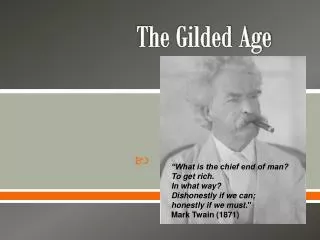
What Does “Gilded” Mean? • Mark Twain novel • “Cheap coat of gold paint” • America was corrupt with millionaires influencing politicians
Political Machines • Powerful organizations which controlled politics through bribery, intimidation, and voter fraud to get politicians to support their cause • Bosses: led these machines. Traded votes for favors like money or improvements to the cities just to get the candidate he wants to win. Very secretive • Targeted immigrants most often
Ulysses S. Grant • Civil War hero, but corrupt in office as president • Whiskey Ring: Grant’s treasurers took bribes from whiskey manufacturers • Credit Mobilier: Union Pacific Railroad construction company which sold shares to members of Congress in exchange for large land grants • Corporations and politicians had corrupt deals
Gilded Age Presidents • Democrats tried to elect candidates to fight this corruption, but hard to do for that same reason • Republicans Rutherford B. Hayes and James Garfield won close elections • Garfield was assassinated however, so Chester A. Arthur became president
Grover Cleveland • When Republicans nominated James Blaine in 1884, many Republicans were angry and gave their support to Grover (Democrat) • Cleveland wins!
Grover Cleveland’s First Term • Cleveland hired and fired government workers based on merit, not their party loyalty • He started to rid corruption in government
Cleveland’s Re-Election Bid • Won popular vote over Benjamin Harrison, but lost electoral college • Harrison (Republican) wins
Benjamin Harrison • Helped fight corruption himself by establishing the Sherman Anti-Trust Act, which helped control inflation and monopolies
Grover AGAIN?!?! • Cleveland ran again against Harrison and WON! • Only president in American History who did not serve consecutive terms • However, an economic depression hit during Cleveland’s second term and angered many Democrats
William McKinley • Republican who served two terms • Worked well with Congress and helped earn trust again with the public towards government, thus ending the Gilded Age presidencies
Civil Service Reform • Garfield worked on corruption by getting rid of the “spoils system,” which some believed led to his assassination • Chester Arthur took over, helped establish the “Pendleton Civil Service Act,” which helped government officials get hired on pure credibility, rather than spoils