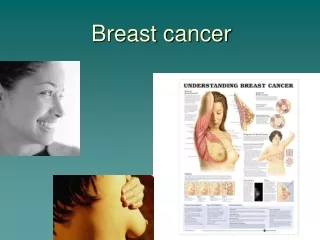
Comprehensive Updates on Breast Cancer: Risk, Detection, and Treatment Advances
460 likes | 609 Vues
This comprehensive overview by Lynn M. Tucker, MD, at Lexington Surgical Associates, provides essential updates on breast cancer, a condition affecting 1 in 8 women over their lifetime. The report estimates 290,170 cases in the U.S. for the year, along with insights into risk factors like age, family history, and genetic factors. It details methods of detection, including mammography and MRI, and highlights advancements in treatment, including surgical options and ongoing research. Staying informed is key in the fight against breast cancer.


Comprehensive Updates on Breast Cancer: Risk, Detection, and Treatment Advances
E N D
Presentation Transcript
Updates in Breast Cancer Lynn M. Tucker, MD Lexington Surgical Associates Lexington Medical Center
BREAST CANCER • 1 in 8 women over lifespan • Estimated 290,170 cases this year • 226,870 invasive • 63,300 in situ (pre-invasive) • 39,510 deaths this year • 3.4% annual decline in death rate since1995 • Largest decrease in women < 50
BREAST CANCER • South Carolina Estimates (2012) • 3,570 new cases • 660 deaths
BREAST CANCER • SEER Data • Diagnosis rate • 63% increase 1950 -1998 • 3.5% annual decrease since 2001 • Death rate has fallen • 40% (1954) vs. 13% (1998) • Mostly due to better treatment and early detection
BREAST CANCER • Age • Risk with age • Average age @ diagnosis 62 • 80% cases > 50 years of age
BREAST CANCER • Family History • First degree relatives (mother/sister) • Premenopausal breast cancer • Ovarian cancer • BRCA-1 & BRCA-2 • Up to 65% lifetime risk • Only 5-10% of the total cases
BREAST CANCER • Previous Breast Biopsies • Atypical Ductal Hyperplasia • 10 % develop breast cancer within 10 years • Lobular Carcinoma in Situ • 1% per year risk of developing breast cancer
BREAST CANCER • Additional Risk Factors • Early onset of puberty (menarche) • No children • First child after 30 years of age • Late menopause (> 55 years)
BREAST CANCER • Additional Risk Factors • Prior chest wall radiation between 10 & 30 years of age • High density breast • race • caucasian : highest risk of developing • African-American : highest death rate • Alcohol (>1-2 drink per day) • HRT (estrogen / progesterone) • post-menopausal obesity
BREAST CANCER • Risk Assessment • Gail Model • Genetic Testing (BRCA-1, BRCA-2)
BREAST CANCER • Gail Model • Age, race, menarche, first child, first degree relatives, previous biopsies, ADH • Relative Risk 1.76 candidates for : • Tamoxifen or Evista for 5 years • Annual MRI along with MMG
BREAST CANCER • Positive Genetic Testing (BRCA1/BRCA2) • Consider Tamoxifen versus prophylactic mastectomies +/- oophorectomies (before 50 yrs) • Early surveillance with triple screen (MRI, MMG, U/S)
BREAST CANCER • Methods of Detection • Physical exam • Hard and/or asymmetric lump • Skin or nipple indentation • Erythema &/or edema without infection • Rash on nipple (Paget’s)
BREAST CANCER • Methods of Detection • Breast Exams • No improvement in survival • Earlier detection allows more treatment options • 10-15% of MMG will miss a cancer • Breast Aware
BREAST CANCER • Methods of Detection • Screening Mammography • Irregular nodule • Microcalcifications • Asymmetry
BREAST CANCER • Screening Mammogram • Canadian Study (2002) • Age 40-49 , no difference in death rate • More cancers were identified • Swedish Study (2001) • 63% reduction in mortality (ages 40 - 69)
BREAST CANCER • Methods of Detection • Ultrasound • Adjunct to mammography • Distinguishes cyst from solid tumors • Irregular margins and shadowing suggest cancer • Poor screening tool
BREAST CANCER • Methods of Detection • MRI • Adjunct to mammography • More accurate in dense breast • Determines extent of cancer • Screening in high-risk patients • 10% false-positive rate
BREAST CANCER • Breast Health Program • Self breast exams • No longer recommended • Breast Aware • Physician breast exam • Every 3 years beginning @ age 18 • Annually beginning @ age 40 • Annual screening mammogram • Beginning @ age 40 • Earlier if family history (10 years earlier than youngest diagnosed)
BREAST CANCER • Biopsy Techniques • Stereotactic Biopsy • Ultrasound Guided Biopsy • Needle Localization Biopsy • Open Biopsy
BREAST CANCER • Different Types (In-situ) • DCIS (pre-malignant) • LCIS (lobular neoplasm)
BREAST CANCER • DCIS • Lumpectomy (invasive recurrence 2%) • Radiation • Tamoxifen • Mastectomy (invasive recurrence <1%)
BREAST CANCER • Lobular Neoplasm (LCIS) • Observation • Tamoxifen • 56% risk reduction • Bilateral Prophylactic Mastectomies • 80-90% risk reduction
BREAST CANCER • Different Types (Invasive) • Invasive Ductal (80%) • Invasive Lobular (10%) • Tubular, Medullary, Colloid, Inflammatory, Paget’s (10%)
BREAST CANCER • Tumor Biology • ER +/ PR+ • ER+/ PR- • Her-2-neu + • Triple negative
Breast Cancer • Local-Regional Treatment Options • Lumpectomy, sentinel node biopsy, radiation • Mastectomy, sentinel node biopsy, +/-reconstruction
Breast Cancer • Breast Conservation • Survival / Recurrence Equivalent • Larger tumors may need pre-op tx. • Chemo vs. hormonal therapy
Breast Cancer • Mastectomy • Tumors unresponsive to pre-op TX • Diffuse malignant calcifications • Local recurrence after lumpectomy
BREAST CANCER • Reconstruction • Tissue expanders / Implants • Transverse rectus abdominis myocutaneous (TRAM) flap • Latissimus dorsi myocutaneous flap
BREAST CANCER • Systemic Therapy (Targeted Therapy) • Hormonal • Tamoxifen 5 yrs then +/- Femara • Aromatase inhibitors (postmenopausal) • Pre-op Hormonal Therapy for large ER/PR + tumors
BREAST CANCER • Systemic Therapy (Targeted Therapy) • Chemotherapy • CMF • TAC • Herceptin & Tykerb • Perjeta (metastatic)
BREAST CANCER • Radiation • Mastectomy • Large tumors >5cm • Close margins • Positive LN / lymphovascular invasion • Lumpectomy • Always except > 70 with low grade tumors + AI
BREAST CANCER Prognosis – 5 Year Survival DCIS >99% Localized 99% Regional 84% Metastatic 23%
BREAST CANCER • Breast Conservation for multicentric dz • SLN Axillary Staging only • Targeted Treatment • Vaccine