Investigating the Effects of Solutions on Egg Structure: A Scientific Experiment
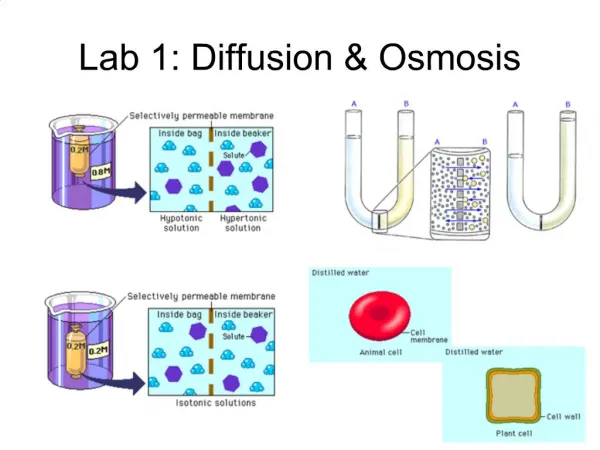
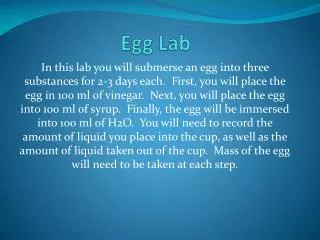
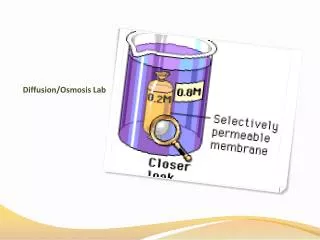
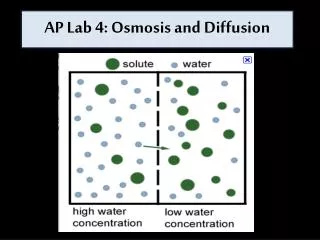
This experiment explores how different solutions affect the size and structure of an egg, which serves as a model for understanding osmosis and chemical reactions. By immersing eggs in vinegar, distilled water, and syrup, we examine how each solution alters the egg's size and the movement of water in and out of the egg. Key questions include the effects of acetic acid on the eggshell, osmosis in distilled water, and the impact of syrup concentration. This investigation enhances our understanding of cellular processes and environmental interactions.

Investigating the Effects of Solutions on Egg Structure: A Scientific Experiment
E N D
Presentation Transcript
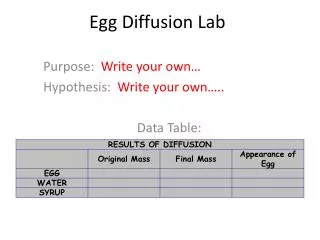
Egg Diffusion Lab Purpose: Write your own… Hypothesis: Write your own….. Data Table:
Data: Questions & Conclusion: 1. Vinegar is made of acetic acid & water. Explain how it was able to remove the calcium shell. 2. (a) What happened to the size of the egg after remaining in the egg solution? (b) Did water move into or out of the egg? Why? 3. (a) What happened to the size of the egg after remaining in distilled water? (b) Did water move into or out of the egg? Why? 4. (a) What happened to the size of the egg after remaining in syrup? (b) Did water move into or out of the egg? Why? 5. Was the egg larger after remaining in water or egg solution? Why? 6. Why are fresh vegetables sprinkled with water at markets? 7. Roads are sometimes salted to melt ice. What does this salting do to the plants along roadsides & why?