The Impact of the Great Depression on Racial, Ethnic, and Religious Conflicts in the 1930s
The Great Depression of the 1930s significantly exacerbated tensions in the United States, leading to increased racial, ethnic, and religious conflicts. The economic hardships contributed to a spike in lynchings of African Americans, fueled by pervasive racial violence. Ethnic conflict intensified, with xenophobia and anti-immigrant violence rising sharply as desperation prompted hostility towards foreigners. Additionally, antisemitism grew, reflecting the broader societal anxieties during this tumultuous decade. This midterm review explores these critical issues in U.S. history.

The Impact of the Great Depression on Racial, Ethnic, and Religious Conflicts in the 1930s
E N D
Presentation Transcript
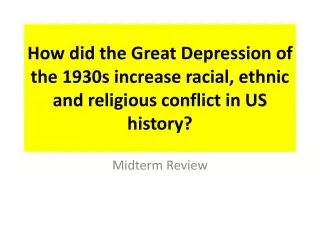
How did the Great Depression of the 1930s increase racial, ethnic and religious conflict in US history? Midterm Review
Racial Conflict • Increase in Lynchings of blacks
Ethnic Conflict • Xenophobia/Anti-Immigrant Violence
Religious Conflict • Growth of Antisemitism in US during 1930s