Understanding Land Fragmentation: Causes, Effects, and Future Recommendations in Lake Champlain
This study explores the phenomenon of land fragmentation, where habitats are reduced to smaller patches, primarily due to human activities and geological processes. It examines the edge effects between fragmented habitats and their interiors, identifying major human causes such as agriculture, roads, and timber harvest. The research assesses the risks of land fragmentation in Lake Champlain’s watersheds, focusing on the impacts on aquatic ecosystems. Recommendations for zoning laws and habitat protection strategies are discussed to mitigate these effects and preserve environmental integrity.

Understanding Land Fragmentation: Causes, Effects, and Future Recommendations in Lake Champlain
E N D
Presentation Transcript
Land Fragmentation Beck Sinclair, Jessie MacQueen, Courtney Phillips
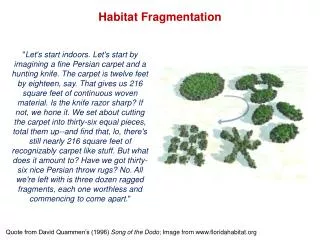
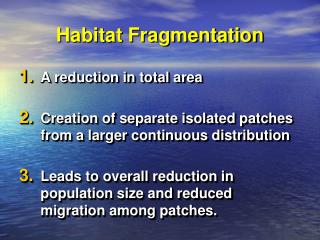
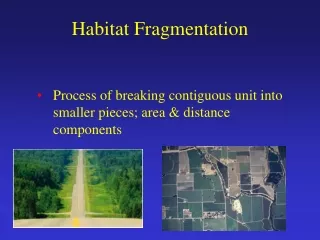
"Habitat reduced from its original extent to a series of smaller patches or fragments" (Glennon and Kretser, 2005) Background • Can occur via geological processes or human practices
Differences in the environmental and biotic conditions between edge and interior habitats Edge Effects
Development • Roads • Agriculture • Timber Harvest Major Human Causes Burlington Free Press: Beaver Patrol
To determine the risk of land fragmentation within the watersheds of the Lake Champlain Basin. Purpose Statement
Agriculture • Roads • Urban • Industrial Sources with Known Effect
Waste Water Treatment Plants • Dams Sources with Unsure Effect
Marinas • Fisheries Sources with No Effect
Wetlands • Forest • Agriculture • Herbaceous Impacted Habitats
Other lakes/ponds • Rivers/Streams • Developed Area Unsure Impacted Habitats
Non-impacted Habitats • Lake Champlain <6ft • Lake Champlain >6ft
Focus on aquatic habitats • Economic values effecting importance filter • Break up developed/urban source into more specific categories • Research zoning laws – is protection enough? Future Recommendations
Bill Gill - Bailey-Howe Map Room • Dan Levy • Brian Voigt - Gund Institute • Pamela Johnson & Pooja Kanwar • Breck Bowden & ENSC 202 Class Acknowledgments