Download
1 / 1
10 likes | 114 Vues
This study explores the burgeoning field of micro-alternative energy, focusing on small-scale renewable electricity generation systems that can operate independently of the power grid. It assesses the economic viability and types of micro-alternative energy technologies, including micro-wind power, micro-solar power, and small-scale bioenergy generation. The research highlights potential implementation at the George D. Aiken Forestry Sciences Laboratory in South Burlington, Vermont, and discusses funding opportunities available through various energy programs and initiatives.

E N D
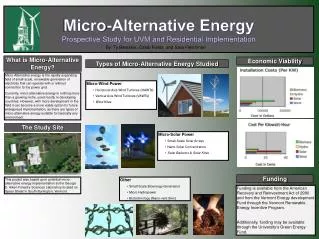
Micro-Alternative Energy Prospective Study for UVM and Residential Implementation By: Ty Bereskie, Caleb Fields, and Sara Fleishman What is Micro-Alternative Energy? Economic Viability Types of Micro-Alternative Energy Studied Micro-Alternative energy is the rapidly expanding field of small-scale, renewable generation of electricity that can operate with or without connection to the power grid. Currently, micro-alternative energy is nothing more than a growing niche, used mostly in developing countries. However, with more development in the field it can become a more viable option for future widespread implementation, as there are types of micro-alternative energy suitable for basically any environment. • Micro-Wind Power • Horiztonal Axis Wind Turbines (HAWTs) • Vertical Axis Wind Turbines (VAWTs) • Wind Kites The Study Site • Micro-Solar Power • Small Scale Solar Arrays • Nano-Solar Concentrators • Solar Balloons & Solar Kites Funding This project was based upon potential micro-alternative energy implementation at the George D. Aiken Forestry Sciences Laboratory located on Spear Street in South Burlington, Vermont. • Other • Small Scale Bioenergy Generators • Micro-Hydropower • Biotechnology (Nano-vent Skin) Funding is available from the American Recovery and Reinvestment Act of 2990 and from the Vermont Energy development Fund through the Vermont Renewable Energy Incentive Program. Additionally, funding may be available through the University’s Green Energy Fund.