AMS-02 Phase II Safety Review: Laser Hazard Analysis and Mitigation in Tracker Alignment System
This document presents the safety review for the Tracker Alignment System (TAS) utilized in the AMS-02 project, focusing on the potential hazards from the use of infrared lasers. It covers the analysis of the Nominal Optical Hazard Distance (NOHD) for key locations, the emission characteristics of the laser outputs, and the containment of lasers within the tracker’s inner volume. The review concludes that, during normal operations, the low-power lasers are diffuse and safe without additional controls. Access restrictions for personnel and safety protocols are also outlined.

AMS-02 Phase II Safety Review: Laser Hazard Analysis and Mitigation in Tracker Alignment System
E N D
Presentation Transcript
Tracker Alignment System Chris Tutt AMS-02 Project Manager AMS-02 Phase II Safety Review
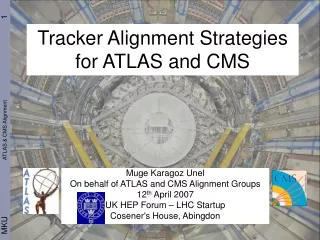
Review of Hazard • Hazard to be addressed is uncontrolled use of lasers causing optical damage to personnel or equipment. • Tracker Alignment System (TAS) uses a series of infrared lasers to measure relative movements of the tracker planes. AMS-02 Phase II Safety Review
TAS System Schematic AMS-02 Phase II Safety Review
Laser Safety Analysis • Nominal Optical Hazard Distance (NOHD) calculated for TAS lasers at three key locations in the system per ANSI standard. • Emission at diode window: 2.78 cm • Emission at LFCR output: 4.64 cm • Emission at LBBX output: 6.81 m • Only LBBX output is significant distance, but that beam is trapped in tracker inner volume. • Tracker inner volume has light-tight vents. • All TAS hardware underneath MLI blankets. AMS-02 Phase II Safety Review
Upper LBBXs Installed Position AMS-02 Phase II Safety Review
TRD/UTOF Installed Position AMS-02 Phase II Safety Review
Lower LBBX Installed Position AMS-02 Phase II Safety Review
Lower USS Installed Position AMS-02 Phase II Safety Review
LFCR Installed Position AMS-02 Phase II Safety Review
Proposed Safety Controls • TAS lasers are low-power, diffuse, and completely contained within tracker inner volume. • No special safety controls are needed during nominal operations. • LBBXs are inaccessible to ground personnel without dismantling payload. • LFCRs are accessible if MLI removed, but any maintenance operations would be done by trained personnel. • TAS system will only be powered on during most of KSC stay. • KSC concurrence documented in Use Authorization K-GU-50101. AMS-02 Phase II Safety Review