Understanding Contraception and Birth Control: Responsibilities, Methods, and Health Insights
390 likes | 520 Vues
This comprehensive guide explores various contraception and birth control methods, including hormonal, barrier, and emergency options. It addresses the evolving responsibilities of both women and men in contraceptive practices while shedding light on the psychology of risk-taking and the importance of preventing sexually transmitted diseases (STDs). The guide also highlights practical guidelines for choosing a method, effectiveness rates, potential side effects, and health implications such as the impact of certain methods on overall well-being.


Understanding Contraception and Birth Control: Responsibilities, Methods, and Health Insights
E N D
Presentation Transcript
Contraception and Birth Control Rik Papagolos, RN
Risk and Responsibility(Chapter Outline) • Women Men, and Birth Control: Who Is Responsible? • Think About It the Psychology of Risk Taking • Preventing Sexually Transmitted Diseases (STD’S)
Methods of Contraception and Birth Control(Chapter Outline) • Birth Control and Contraception: • What’s the Difference? • Choosing a Method • Sexual Abstinence and Outercourse • Practically Speaking GUIDELINES FOR CHOOSING A CONTRACEPTIVE METHOD • Hormonal Methods: the Pill and Implants
Methods of Contraception and Birth Control(Chapter Outline) • Think About It : UNRELIABLE AND MYTHICAL • Methods of Contraception • Barrier Methods: the Condom Female Condom, Diaphragm, and Cervical Cap • Practically Speaking: HINTS FOR EFFECTIVE CONDOM USE
Methods of Contraception and Birth Control(Chapter Outline) • Spermicidal • The IUD (Intrauterine Device) • Fertility Awareness Methods • Sterilization • Practically Speaking: IS STERILIZATION THE RIGHT CHOICE FOR YOU? • Emergency Contraception
Abortion(Chapter Outline) • Methods of Abortion • A Decline in the Prevalence of Abortion • Women and Abortion • Men and Abortion • The Abortion Debate
Risk and Responsibility • If intercourse occurs the day before ovulation, the chance of pregnancy is about 30%. • If intercourse occurs the day of ovulation, the chance of pregnancy is about 15%. • Over the course of one year, couples who do not use contraception have a 90% chance of pregnancy.
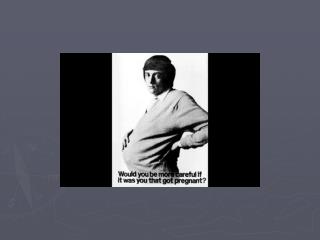
Women Men, and Birth Control: Who Is Responsible? • Traditionally has been the women's responsibility. • Attitudes are changing. • In addition to use of a condom men can help take contraceptive responsibility by.
Women Men, and Birth Control: Who Is Responsible? • 1. Exploring ways of making love without intercourse; • 2. Helping to pay doctor or clinic bills and sharing the cost of pills, implants, or other birth control supplies;
Women Men, and Birth Control: Who Is Responsible? • 3. Checking on supplies, helping to keep track of the woman’s menstrual cycle, and helping his partner with her part in the birth control routine; • 4. In long-term relationships, if no (or no more) children are wanted, having a vasectomy.
Think About It the Psychology of Risk Taking • See Page 312
Preventing Sexually Transmitted Diseases (STD’S) • Most STD’s are treatable if diagnosed early. • AIDS is one exception> AIDS is FATAL. • Some contraceptive methods work to help prevent disease and pregnancy. • Latex and polyurethane condoms provide barrier protection against virus and bacterial infection: such as Herpes virus, chlamydia, gonococcus, and HIV.
Preventing Sexually Transmitted Diseases (STD’S) • Not 100% effective at preventing infection or pregnancy. • Spermicides - Chemicals that kill sperm offer protection against some STD’s, foam or film can provide extra protection. • Use of spermicides with barrier methods increase the effectiveness of both the infection and pregnancy protection of the method.
Preventing Sexually Transmitted Diseases (STD’S) • Two additional chapters in the text cover STD’s in more detail.
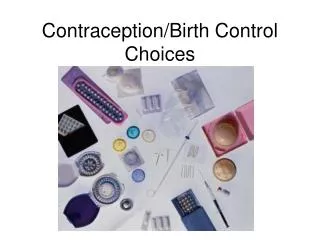
Birth Control and Contraception • What is the difference • Birth Control: Preventing birth from taking place • IUD • Emergency contraceptive pills • RU-486 • Surgical Abortion
Birth Control and Contraception • Contraception: Preventing conception (preventing the sperm and the egg from uniting) • Barrier methods • Condoms, diaphragms • Spermicides • Hormonal methods • Pill • Shot (depo) • Implants
Methods of Contraception and Birth Control • Choosing a Method • The best method is the one you will use consistently and correctly • Know the reliability of method • Know the advantages and disadvantages • Side effects • Risks
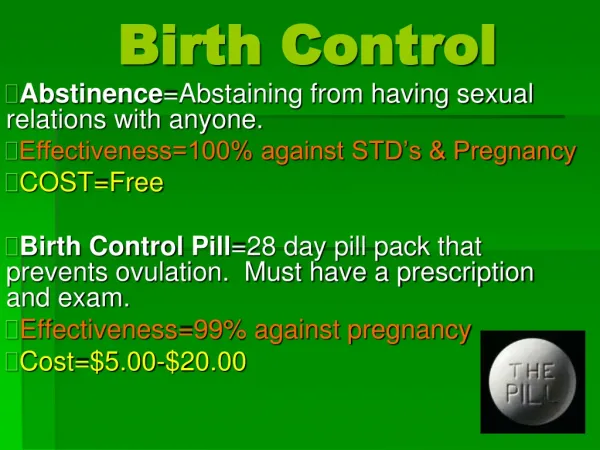
Methods of Contraception and Birth Control • Abstinence • Choosing not to have intercourse • Outercourse • Sexual activity without penetration
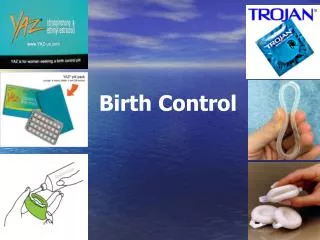
Methods of Contraception and Birth Control • Hormonal Methods • The pill • Implants • Injections
The Pill • Combination of estrogen and progestin (some progestin only) • Inhibits ovulation • Thickens the cervical mucous • Changes the lining of the uterus to inhibit implantation of the fertilized ovum • Alter the rate of ovum transport • 99.5 % effective (if used correctly) 92 %
The Pill Advantages • Easy to use • Dependable • No additional appliances • Can regulate menstrual flow and decrease cramps and other symptoms of menses
The Pill • Problems • Side effects • Changes in menstrual flow • Breast tenderness • Nausea • Vomiting • Wt. gain or loss
The Pill • Contraindications • Heart disease • Kidney disease • Asthma • High blood pressure • Diabetes • Epilepsy • Gall bladder disease • Sickle-cell anemia • Migraine headaches • depression,
The Pill • ACHES • Abdominal pain • Chest pain or shortness of breath • Headaches (severe) • Eye problems (blurred vision, flashing lights and blindness) • Severe leg pain
The Pill • Smoking and the Pill • DO NOT TAKE THE PILL IF YOU SMOKE
Implants • Progestin only (Norplant) • Prevents ovulation • More effective than the Pill
Implant • Advantages • Convenience • Eliminate user error • No menses or very light • Decreased cramping
Problems Difficulty in removing Side effects Similar to the pill Changes in menstrual bleeding Headaches Side effects wt. gain Acne breast tenderness hair growth ovarian cysts Implant
Implant • Contraindications • Liver disease • Breast cancer • Cardiovascular disease • Unexplained vaginal bleeding • Pregnant • Smokers
Injectable Contraceptives • Depo-Provera (DMPA) Progesterone • Can stop menses • Side effects include • Spotting, wt. gain, headaches, breast tenderness, dizziness, loss of libido and depression • Lunelle Progestin and estrogen • Similar to the pill in all aspects
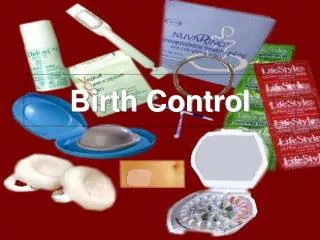
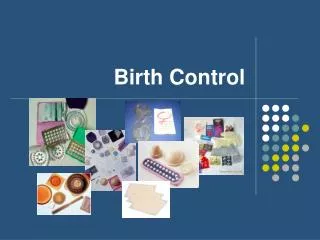
Barrier Methods • The condom • Female condom • Diaphragm • Cervical cap • Sponge
Spermicides • Nonoxynol-9 • Use in combination with barrier methods of contraception • Foam • gel • Film • Creams, jellies and suppositories
IUD • Intrauterine device • Copper and plastic (Copper T-380A) 10 years • Plastic and Progesterone (progestasert IUD) 1 year • 90-96 % effective in use • Increased risk of PID
Fertility Awareness Methods • Calendar or rhythm method • Midway in cycle • Basal body temperature (BBT) method • Increase in body temperature • Cervical Mucous Method • Clear slippery mucous • Symptothermal method • Combination of BBT and Cervical Mucous methods
Sterilization • For Women • Tubal ligations • Cut and seal the fallopian tubes • Hysterectomy • Removal of the uterus • For Men • Vasectomy • Vas deferens are cut and sealed
Emergency Contraception • Emergency Contraception Pill (ECP) • Copper IUD
Abortion • Spontaneous abortion (miscarriages) • Induced abortion
Induced Abortion • Drug induced • Mifepristone (RU-486) • Surgical Methods • Vacuum aspiration • Dilation and evacuation • Hysterectomy • Saline, prostaglandins and urea (after the first trimester)