

SlideServe
Menu
Préférences
© SlideServe · v2026

Study Context

harrel avatar
16 diapositives · 188 Views · Jan 04, 2020

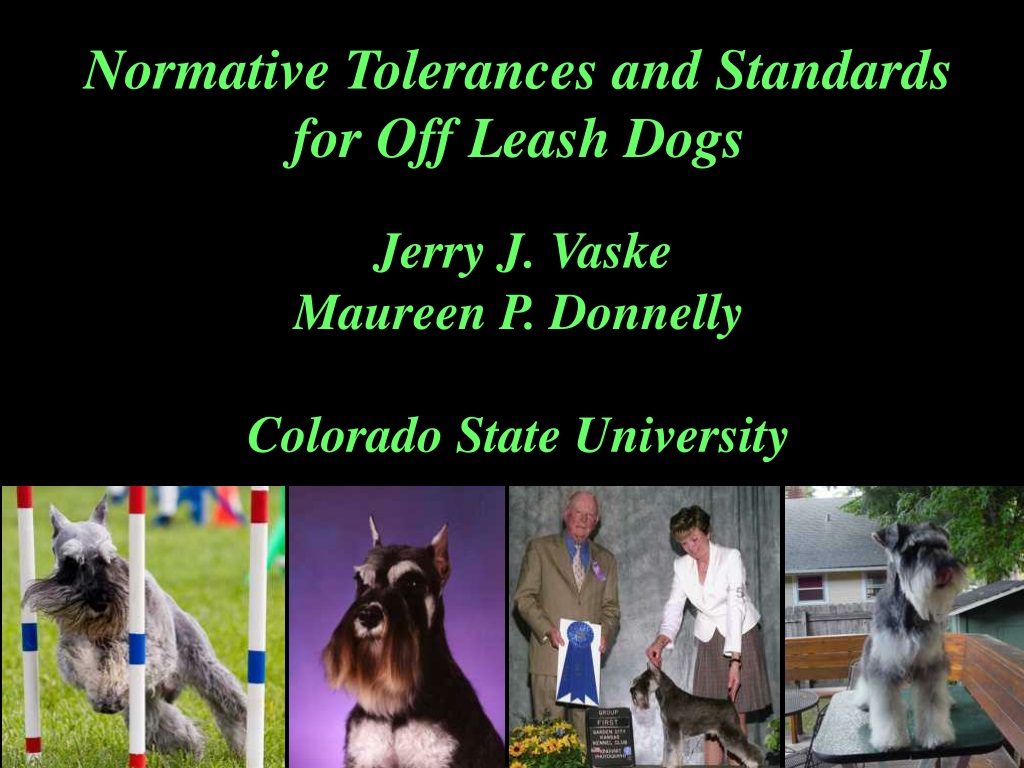
Normative Tolerances and Standards for Off Leash Dogs Jerry J. Vaske Maureen P. Donnelly Colorado State University. Study Context. The presence of off leash dogs at OSMP created potential conflict situations. In response, OSMP implemented a Voice & Sight Tag program.
Study Context - slide 1
01 / 16Study Context
1 / 17

Télécharger la présentation

Study Context
Une image / un lien ci-dessous est fourni (tel quel) pour télécharger la présentation

Politique de téléchargement : le contenu du site vous est fourni TEL QUEL pour votre information et votre usage personnel ; il ne peut être vendu, concédé sous licence ni partagé sur d’autres sites sans l’accord de son auteur.Le contenu vous est fourni TEL QUEL, pour votre information et votre usage personnel uniquement. Téléchargez la présentation en cliquant sur ce lien. Lors du téléchargement, si vous ne parvenez pas à télécharger une présentation, l’éditeur a peut-être supprimé le fichier de son serveur.Pendant le téléchargement, si vous ne parvenez pas à obtenir une présentation, le fichier a peut-être été supprimé par l’éditeur.

F I N

Plus de contenu associé

Transcription de la présentation
  1. Normative Tolerances and Standards for Off Leash DogsJerry J. VaskeMaureen P. DonnellyColorado State University

  2. Study Context • The presence of off leash dogs at OSMP created potential conflict situations • In response, OSMP implemented a Voice & Sight Tag program • This study applied an indicator / standards (norms) model to understand conflicts with off leash dogs

  3. Dogs approaching a visitor uninvited • Dogs jumping on orsniffing or licking a visitor Directhuman-doginteractions What is an Indicator? • Definition – Any measure that describes an experience • Examples • Dogs off trail • Dogs play chasing another dog • Owners repeatedly calling a dog • Owners not picking up after their dogs • Dogs flushing birds or causing wildlife to flee Indirecthuman-doginteractions

  4. The Role of Standards • Standards identify the conditions: • Desirable (e.g., Picking up after your dog) • Should not be exceeded(e.g., zero-tolerance for dogs chasing wildlife) • Objective • Link management objectives (type of experience to be provided) • To the indicators in quantitative terms

  5. Linking Objectives to Indicators to Standards Mgmt Objective – Provide quality visitor experiences Indicator 1 Dog flushes or causes wildlife to flee Standard 1 0% tolerance Indicator 2 Owner repeatedly calls the dog Standard 2 < 10% of visitors experience situation Indicator 3 Dog makes physical contact with a visitor Standard 3 < 5% of visitors experience situation Indicator 4 Owners not picking up after their dog Standard 4 < 10% of visitors experience situation

  6. 4 Norm curve 3 2 Intensity 1 Acceptability 0 Concensus -1 Acceptable range -2 -3 -4 0 1 3 5 7 9 15 20 25 100 Number of Encounters Structural Characteristics of Norms Standard Deviation orPotential Conflict Index (PCI2)

  7. On-site Survey at Boulder Open Space & Mountain Parks (OSMP) 951 completed surveys Response rate = 93% Methods

  8. Survey Questions • Perceived problems with dog/owner behaviors • Normative tolerances • Frequency of observing specific dog/owner behaviors • Acceptability of dog/owner behaviors • Maximum tolerances for dog/owner behaviors • Dog ownershipNo: n = 431, 46%Yes: n = 509, 54%

  9. Very Acceptable Neither Very Unacceptable Dogs sniffing visitor Dogs approaching uninvited Dogs licking visitor Dogs pawing visitor Acceptability Dogs jumping on visitor Social Norm curves: Direct human-dog interactions 2 1 0 -1 -2 0 1 2 3 4 5 6 Times Observed

  10. Dogs play chasing Very Acceptable Neither Very Unacceptable Dogs off trail Acceptability Social norm curves:Indirect human-dog interactions Owners repeatedly calling Dogs flushing birds Dogs causing wildlife to flee 2 Owners not picking up 1 0 -1 -2 0 1 2 3 4 5 6 Times Observed

  11. Very Acceptable Neither Very Unacceptable Acceptability 0.3 0.5 0.38 0.39 0.33 0.23 0.27 0.07 0.18 0.18 Non-owners Dog owners Social Norm ConsensusDirect Human-Dog Interaction 2 1 0 -1 -2 Dogs Dogs Dogs Dogs Dogs Jumping Pawing Licking Approach Sniffing Visitor Visitor Visitor Uninvited Visitor

  12. Very Acceptable Neither Very Unacceptable Acceptability Non-owners Dog-owners Social Norm ConsensusIndirect Human-Dog Interaction Owners Dogs Dogs Owners Dogs Dogs Not Causing Flushing Repeatedly Off Play Picking Wildlife Birds Calling Trail Chasing Up to Flee

  13. % of TimePersonal NormExceeded Personal Norm Tolerances Indirect human-dog interaction Owners not picking up 50 Owners repeatedly calling 28 Dogs off trail 28 Dogs play chasing 18 Dogs causing wildlife to flee 17 Dogs flushing birds 13 Direct human-dog interaction Dogs approaching uninvited 35 Dogs sniffing visitor 27 Dogs jumping on visitor 27 Dogs licking visitor 19 Dogs pawing visitor 17

  14. Summary of Key Findings • 9 of 11 indicators reflected “no tolerance” norms(i.e., should never occur) • A “single tolerance” norm was observed for: – dogs play chasing (exceeded 28%) – dogs off trail (exceeded 18%) • Statistical differences between: dog owners and non-owners were minimal • Most serious norm violations: – owners not picking up (exceeded 50%) – dogs approaching uninvited (exceeded 35%)

  15. Recommendations • Given visitors’ “no tolerance” norms, management std. of: “no more than 0% of visitors should have their norms exceeded” could be recommended • BUT this mgmt std. not realistic given current conditions • Consistent with other OSMP standards, recommend: “no more than 10% of visitors should have their norms exceeded” • 10% mgmt. std. currently always exceededBUT Voice & Sight Dog Tag Program is new

  16. Questions