Understanding Shock: Types, Signs, and Treatment Protocols
Shock is a critical condition characterized by widespread inadequate tissue perfusion, leading to cellular dysfunction. It results from cardiovascular system failure, triggering compensatory mechanisms like tachycardia and vasoconstriction. There are four major categories: hypovolemic, cardiogenic, obstructive, and distributive shock. Symptoms range from early signs such as pale skin and tachycardia to late decompensated signs like hypotension and cyanosis. Treatment includes maintaining airway patency, controlling bleeding, and providing rapid transport to medical facilities. Understanding shock can save lives.

Understanding Shock: Types, Signs, and Treatment Protocols
E N D
Presentation Transcript
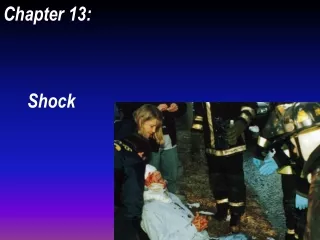
Shock • Definition - widespread inadequate tissue perfusion • Caused by state of collapse and failure of the cardiovascular system
Compensatory Mechanisms • tachycardia • vasoconstriction • increased respiratory rate & depth • decreased urine production
Shock • 4 major categories of shock • hypovolemic • cardiogenic • obstructive • distributive
hypovolemic shock inadequate blood / fluid volume • trauma • hemorrhage • burns • dehydration
Cardiogenic shock • Pump failure - Heart lacks power to force blood through the circulatory system • Basically, CHF that is out of control • Onset may be immediate or not apparent for 24 hours after AMI • Can also be caused by Dysrhythmias
Obstructive shock Physical obstruction of blood flow • tension pnuemothorax • cardiac tamponade • pulmonary embolus • dissecting aortic aneurysm
Distributive shock widespread reduction of blood vessel tone (vasodilation) • neurogenic (spinal cord trauma) • Sepsis – see dehdration • anaphylaxis • drugs/ overdose • psychogenic
Shock Early Signs (compensated) • Pale, cool, moist skin** • Tachycardia • delayed capillary refill • Tachypnea • Agitation/anxiety/restlessness • ALOC** • Nausea/Vomiting • Marked thirst
Shock Late signs (decompensated) • Early signs PLUS • Hypotension • Labored irregular breathing • Ashen, mottled, cyanotic skin • Thready or absent peripheral pulses • Dilated pupils • Poor urinary output
When to Expect Shock • Multiple severe fractures • Abdominal or chest injuries • Spinal injuries • Severe infection • Major heart attack • Anaphylaxis
treatment for shock Treatment does not vary with type of shock
TX for shock • Maintain airway • Control external bleeding • Shock position • High flow oxygen • Rapid transport • Keep warm • Do not give the patient anything by mouth
ALS Considerations • IV Fluid “challenges” (hypovolemic) • Medications (cardiogenic / distributive) • MAST- Medical Anti Shock Trousers (not used in California)
Dehydration History of: • nausea • vomiting • exertion • diarrhea
Dehydration Signs dry mucus membranes sunken eyes decreased urination poor skin turgor • note: fontenelles for pediatrics
what is Blood pressure? BP = CO x PVR
Cardiac Output (CO) • the amount of blood pumped by the left ventricle over 1 minute • CO = Stroke volume x BPM (beats per minute)
Stroke Volume • the amount of blood pumped by the left ventricle in one contraction
Peripheral Vascular Resistance • the force against which the heart has to beat. • partially determined by the size of the blood vessels • AKA PVR