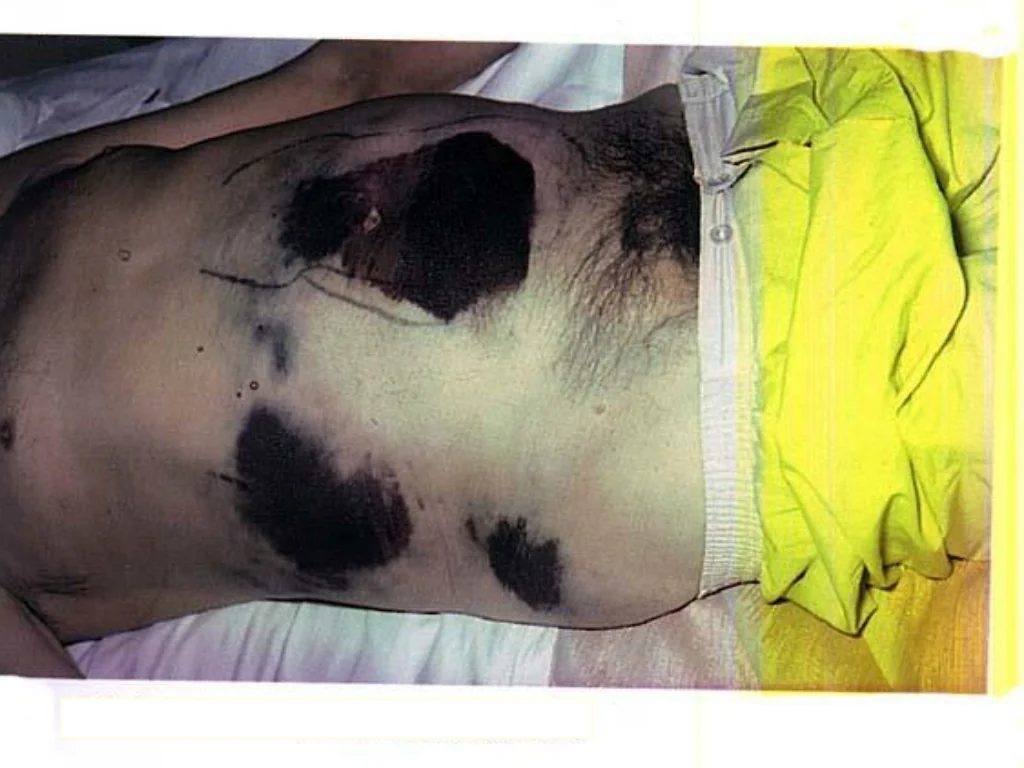
shock. 一、 Introduction : 1. 1731. Le Dran : French He first used ‘shock’ to describe the severe condition of the patient of hurt. 2. 1895 Warren describe the clinical manifestations of shock. the face is pale or cyanosis cold and clammy skin
Une image / un lien ci-dessous est fourni (tel quel) pour télécharger la présentation
Politique de téléchargement : le contenu du site vous est fourni TEL QUEL pour votre information et votre usage personnel ; il ne peut être vendu, concédé sous licence ni partagé sur d’autres sites sans l’accord de son auteur.Le contenu vous est fourni TEL QUEL, pour votre information et votre usage personnel uniquement.Téléchargez la présentation en cliquant sur ce lien.Lors du téléchargement, si vous ne parvenez pas à télécharger une présentation, l’éditeur a peut-être supprimé le fichier de son serveur.Pendant le téléchargement, si vous ne parvenez pas à obtenir une présentation, le fichier a peut-être été supprimé par l’éditeur.
一、Introduction : 1. 1731. Le Dran : French He first used ‘shock’ to describe the severe condition of the patient of hurt.
2. 1895 Warren describe the clinical manifestations of shock
the face is pale or cyanosis • cold and clammy skin • rapid and thready pulse • oliguria • apathy ★hypotension (Crile)
Mechanism: peripheral circulatory failure Vascular center — paralysis Treatment: pressor
1960s: The theory of microcirculation: Sympathetic-adrenal medulla — hypersympathetic 70s : Cellular metabolic disturbance 80s: septic shock
二、Concept: Causes disturbance blood flow of microcirculation functional and metabolic disorders of the vital organs Inadequate tissue perfusion
三、Etiology and classification of shock ㈠ Etiology 1. Blood loss and body fluid loss SI=HR/SBP SI Blood Loss 0.5 10% compensation 1.0 20% ~ 30% shock 1.5 50% death
5. Anaphy`laxis : anaphylaxic shock 6. Cardiogenic shock: 7. Neurogenic shock: ㈡ classification of shock 2. 1. According to the cause of shock
According to the start problem 1) Hypovolemic shock: CVP,CO,artery blood pressure PR 2) Vasogenic shock: 1/5 cap opening • Cardiogenic shock: CO CI<2.2L/min.m2 myoardiumgenic shock non myoardiumgenic shock
2.changes of microcirculation : “no perfusion , no flow” , no-reflow(, WBC sequestration 3.Effects on body a.venous return to heart b.Coagulation bleeding c. Thrombosis and embolism
五、Cellular metabolism alteration (一) Dysfunction of Cellular metabolism : a. hypoxia glycolysislactic acidosis b. ATP Na+-K+ pump cellular edema c. metabolic acidosis
Experiment The function of WBC: leucocyte deficiency Copy shock model of Rat Test group40mmHg all alive Control 36% death Test group30mmHg all alive Control 100% death
H. Robert Horvitz Massachusetts Institute of Technology (MIT) Cambridge, MA, USA b. 1947 John E. Sulston The Wellcome Trust Sanger Institute Cambridge, United Kingdom b. 1942 Sydney Brenner The Molecular Sciences Institute Berkeley, CA, USA b. 1927(in Union of South Africa) (二)Injury and apoptosis of cells 2002 WHO: You ,he or she